OddCameras.com Pentax MZ 50
Pentax was founded in 1919 as Asahi Kogaku Goshi Kaisha, a manufacturer of eyeglasses. In 1938 it changed its name to Asahi Optical Co. The company developed Japan's first SLR, the Asahiflex in 1952. They bought the Pentax name in 1957 from the East German VEB Zeiss Ikon. The name was a mix from pentaprism and their Contax brand.
In 2002 Asahi Optical Co. changed its name to Pentax Corporation. In
2007 Pentax was bought by Hoya. In 2011 Hoya sold the Pentax digital
camera branch to Ricoh, becoming Pentax Ricoh Imaging (now Ricoh
Imaging).
In 1975 Pentax created the Pentax K-mount (or PK-mount), a bayonet lens
mount standard for SLR cameras. It was updated several times and was
still used for their digital SLRs. KAF2 and KAF lenses are best for the MZ cameras.
The Pentax MZ cameras (ZX in America) were a series of small and
light
35mm film SLR cameras, made from 1996 (MZ-5/MZ-10) until 2006 (MZ-S).
As most people switched to digital photography, MZ cameras are cheap.
They are often sold with two or three lenses, which can make them a
deal. The plastic gearing can fail over the time, everything else seems
to be reliable. So rarely used cameras are to be preferred.
The model presented here, the MZ-50, was launched in 1997.
The main features are:
Shutter: electronic vertical focal plane, speeds: 30s to 1/2000 and B
Automatic exposure with several modes, manual modes with light metering assistance
Focus: automatic or manual
Film speeds: automatic 25-5000 ISO, manual 6-6400
Auto-wind and rewind, mid roll rewind
Dimensions: 135x90x62mm, Weight 360g (body)
Some photos:
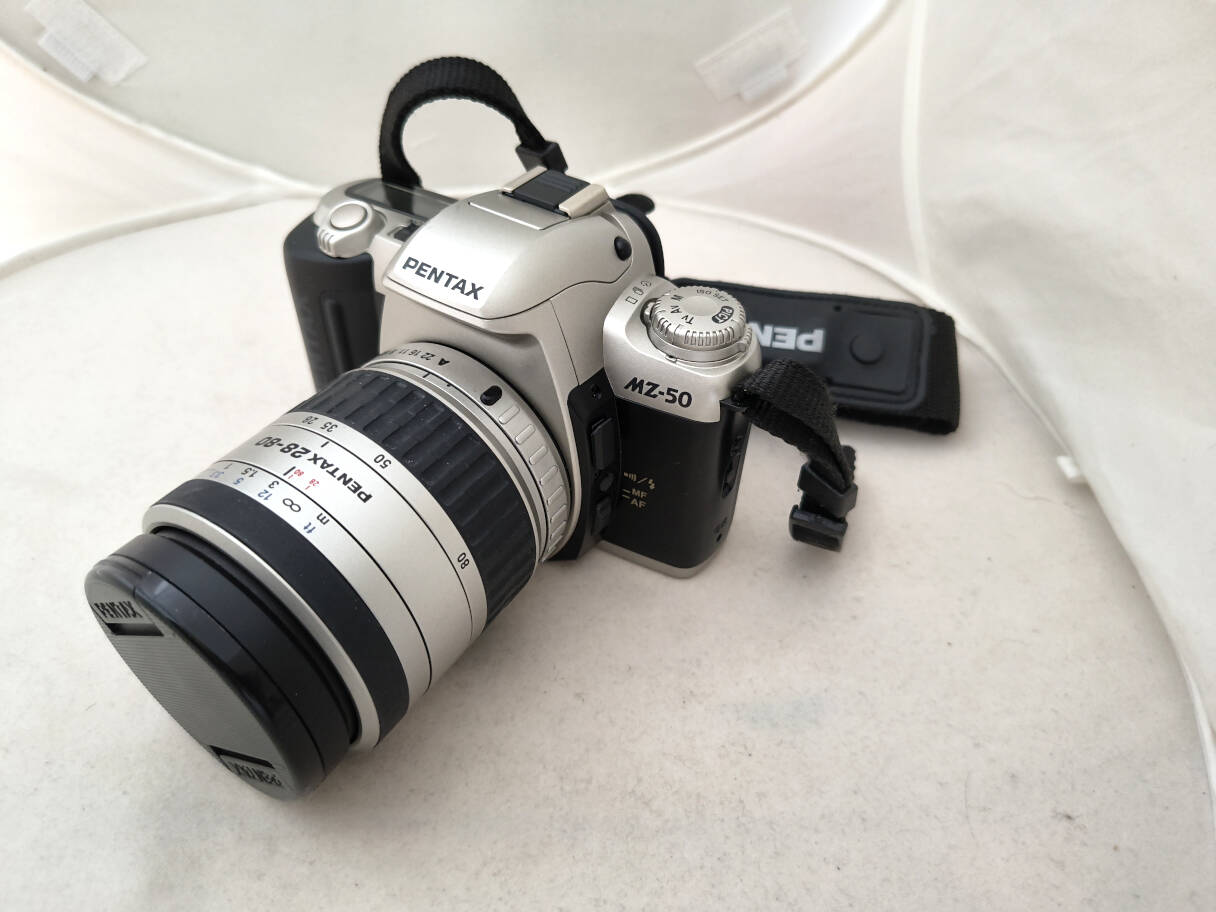
Camera, 28-80 zoom lens, strap and lens cap. This is one of the good standard zoom lenses.
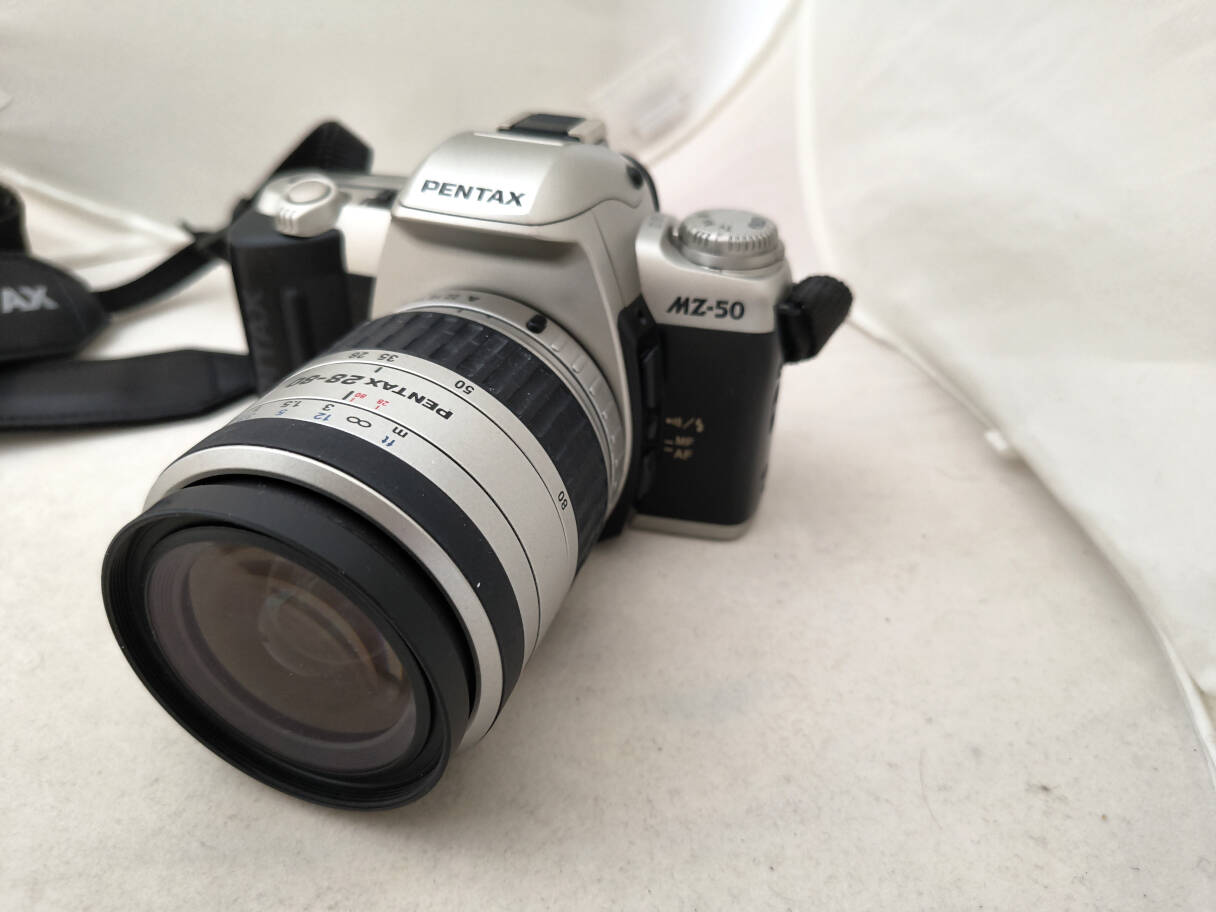
Camera front.
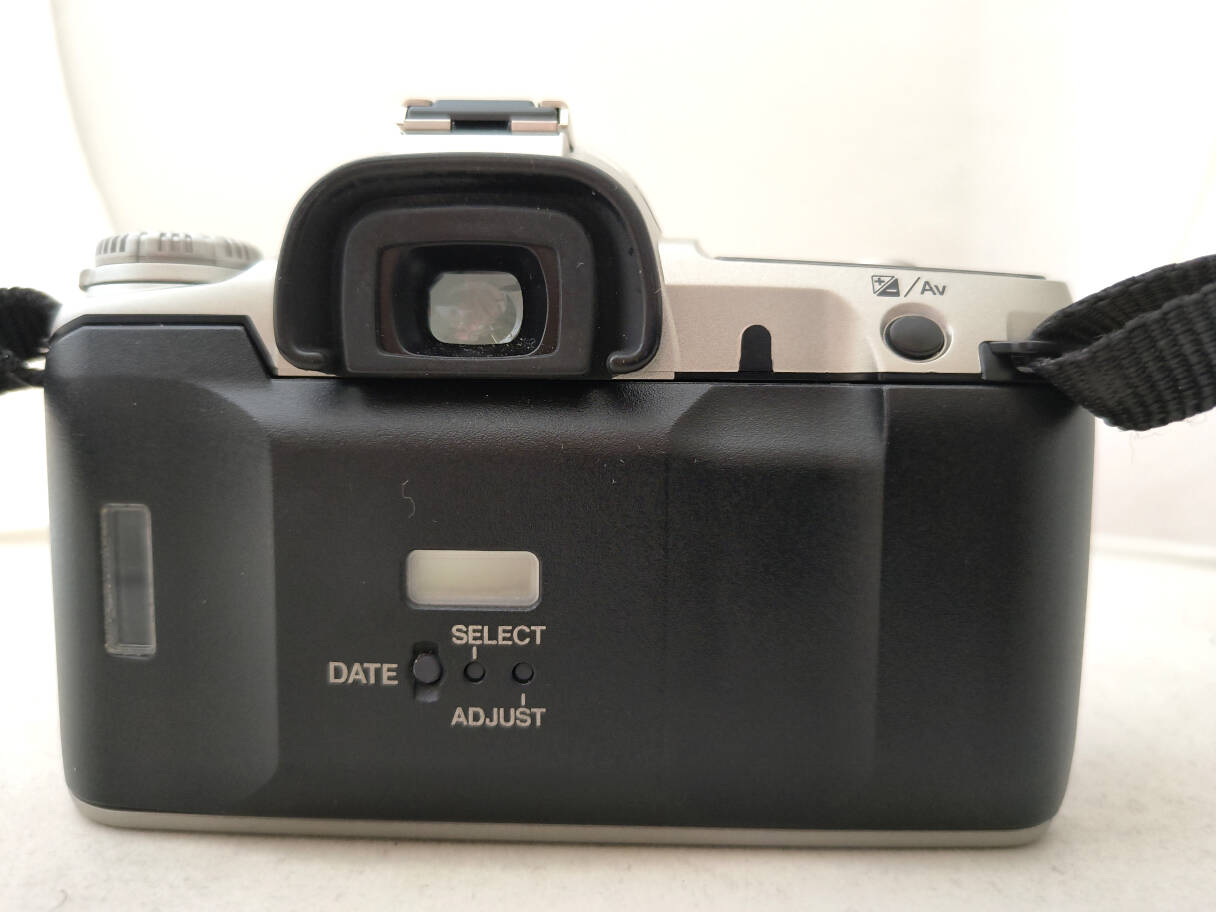
Camera
back. This is a date back. Note the exposure compensation button towards the top.
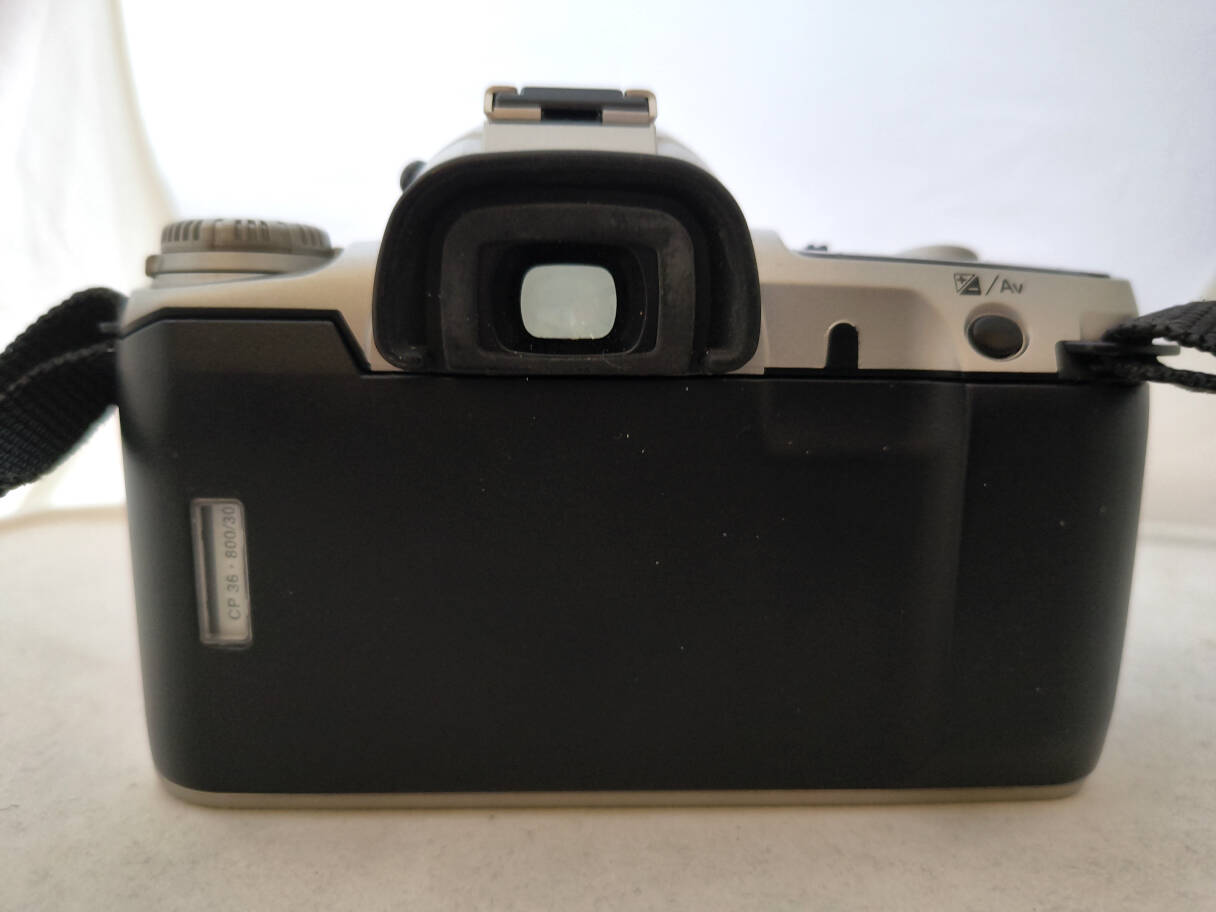
Camera
back. This is a different camera without date back.
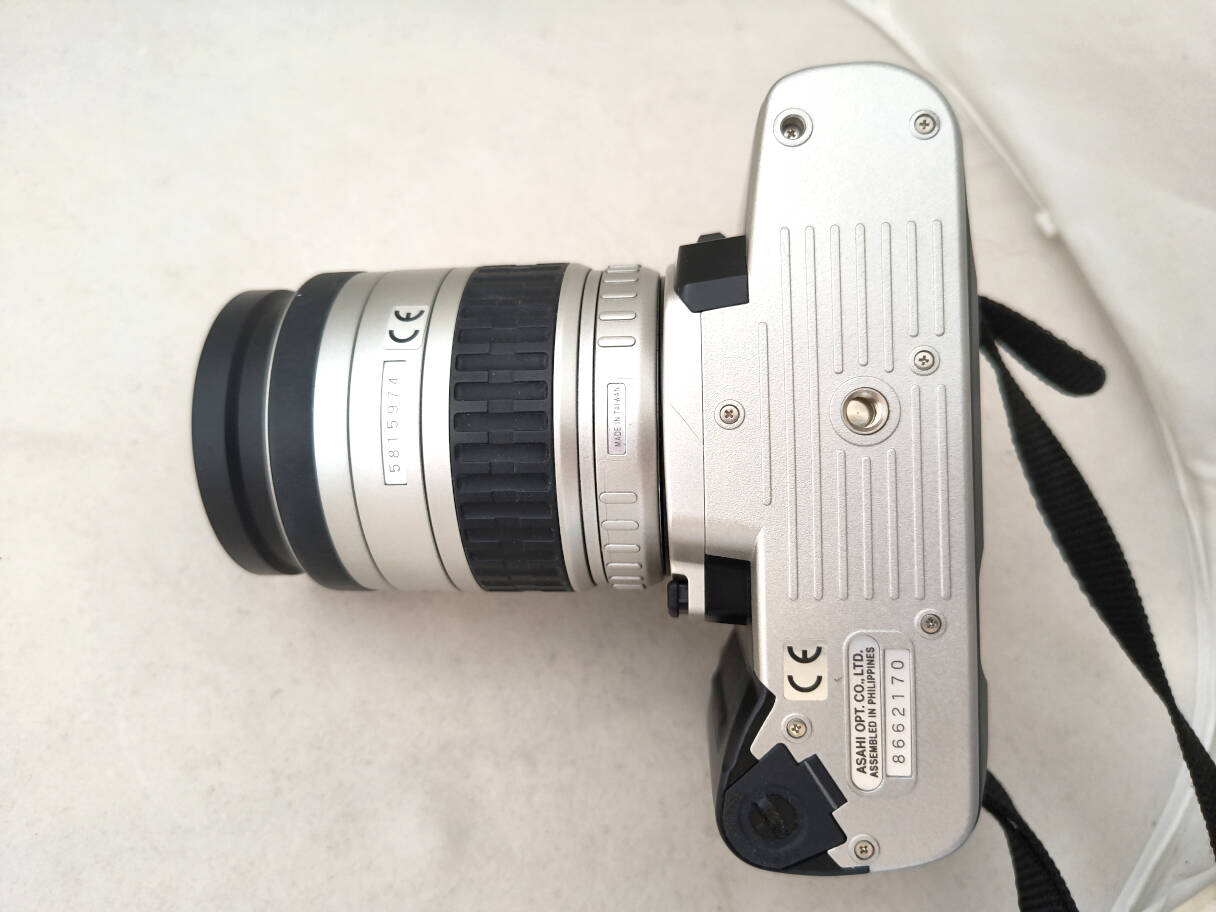
Camera
bottom. Tripod socket. Battery compartment, takes 2 CR2 batteries.
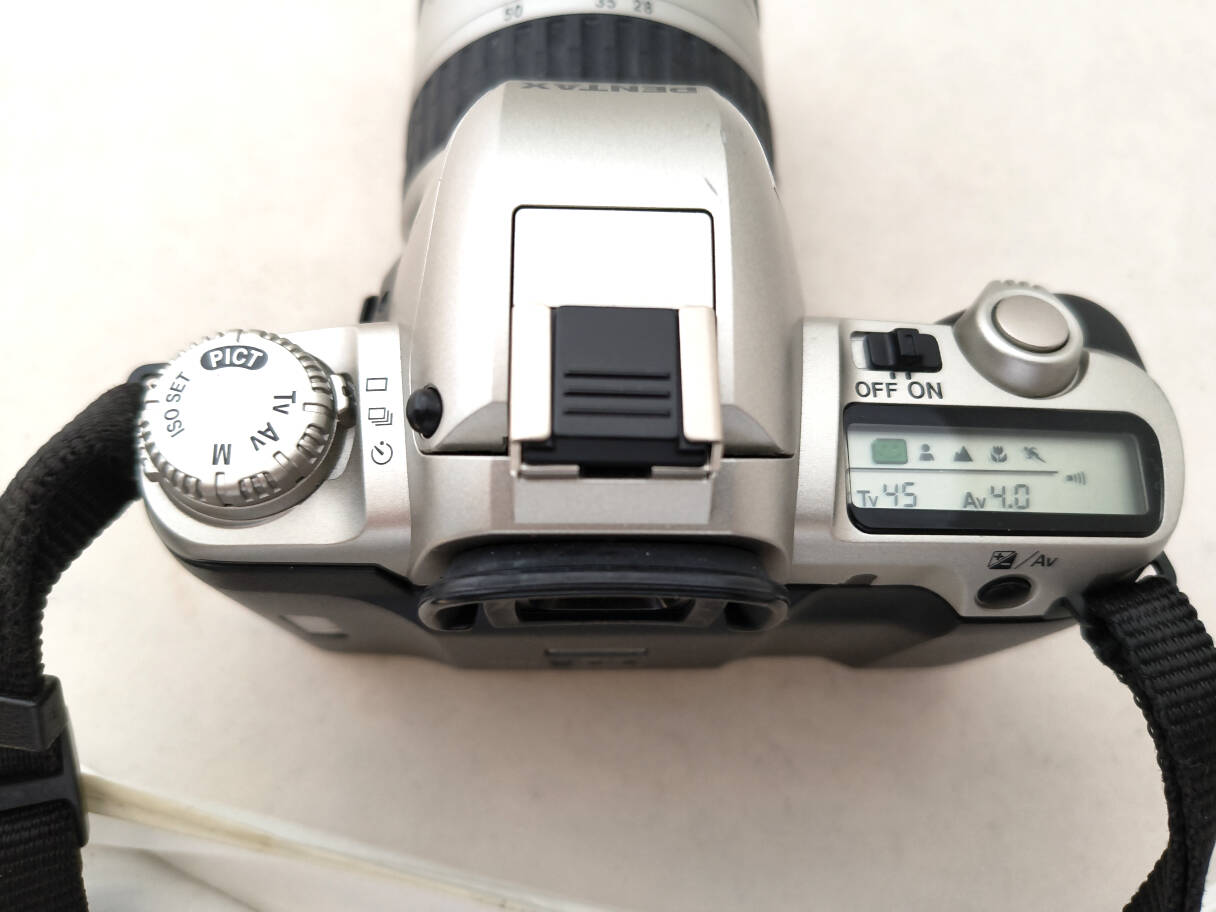
Camera top. Mode dial and Drive mode switch. Flash pop-up button. Built-in flash and Hot Shoe. Main switch. Shutter release button and Select switch. Clear LCD screen.
Camera
set to picture mode, fully automatic. Standard setting. With the select
switch you can cycle through the other pre-settings: portrait,
landscape, close-up and action. Time and aperture are only visible for
a moment on the screen and in the viewer when you half-press the
shutter.
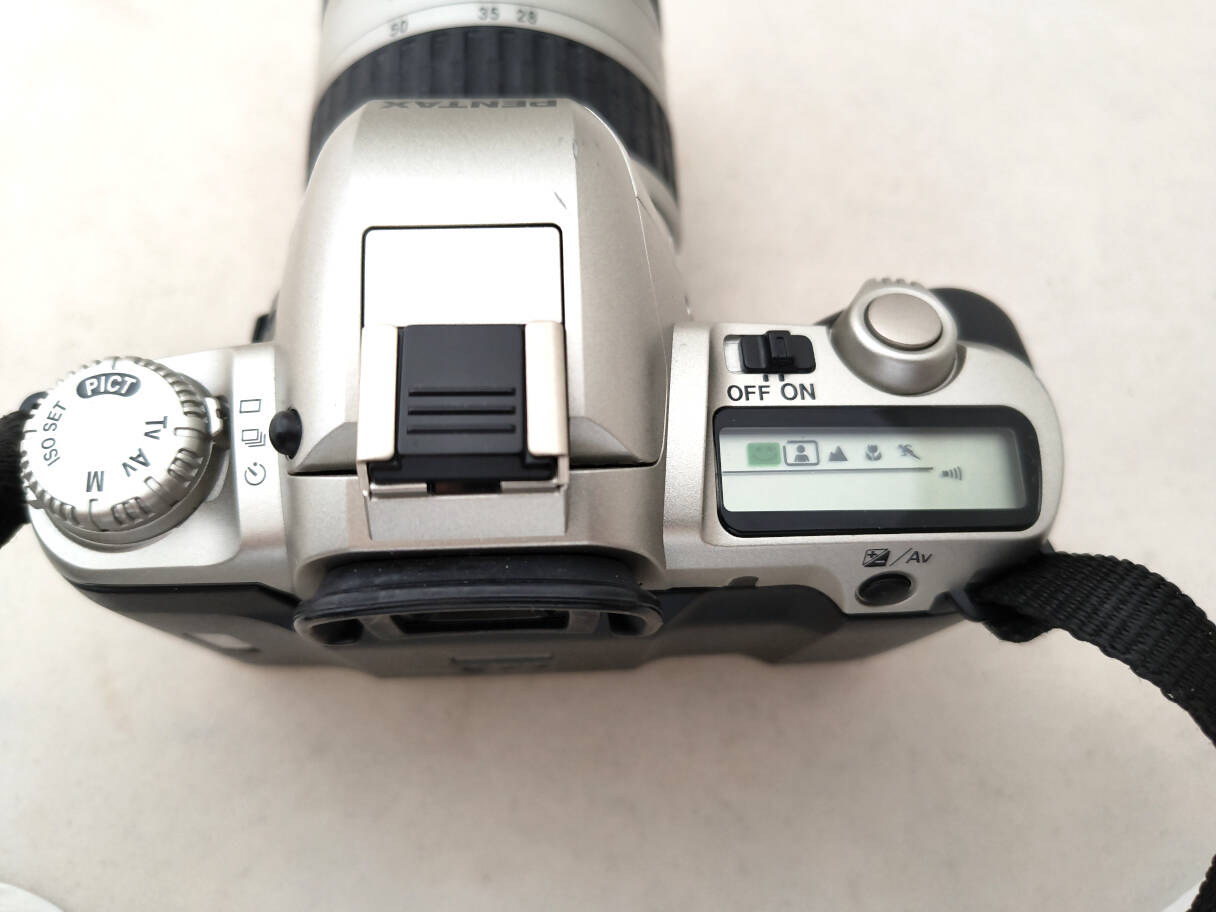
Picture mode, portrait pre-setting, shallow DOF.
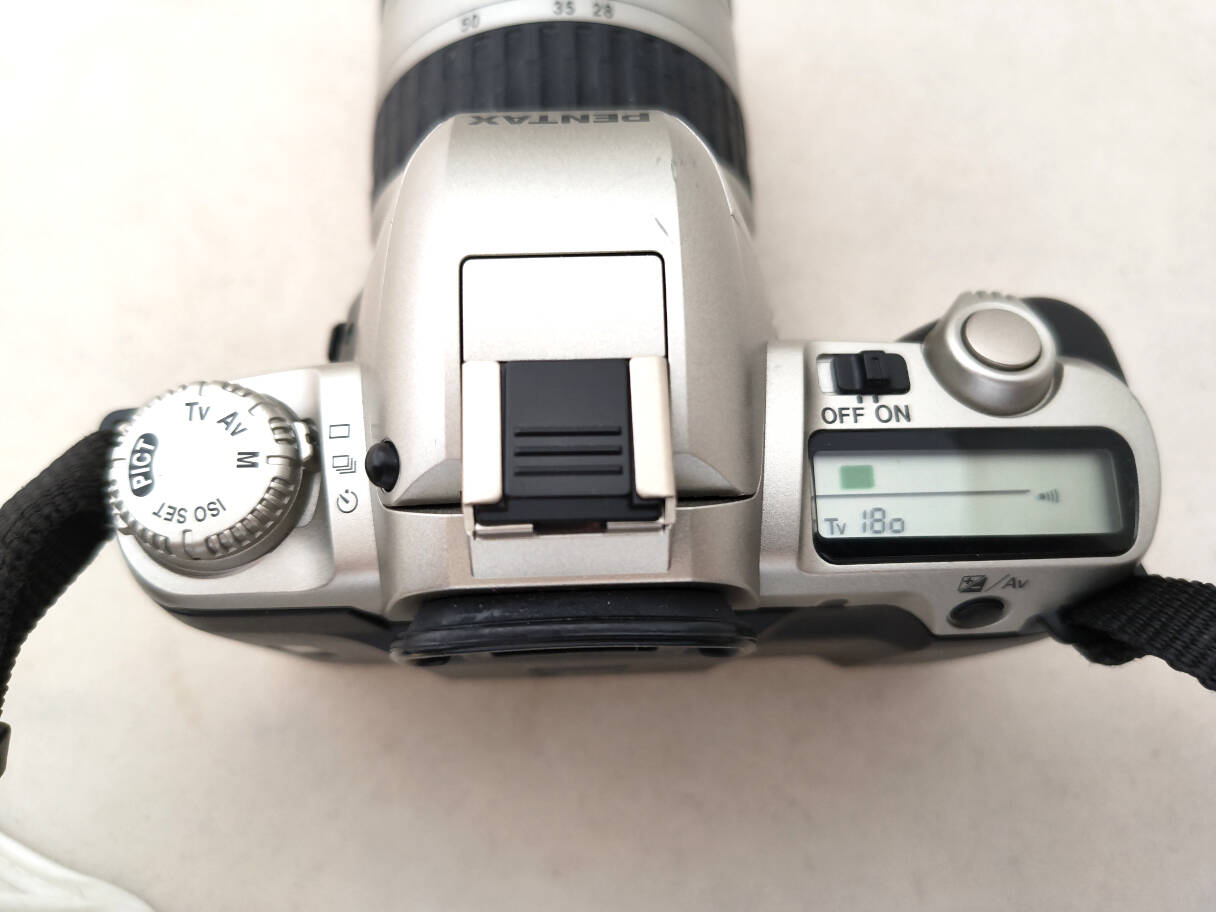
Shutter priority (time) mode. With
the select switch you can cycle through the speeds, the aperture will
appear if you half-press the shutter and blink, if it's not sufficient.
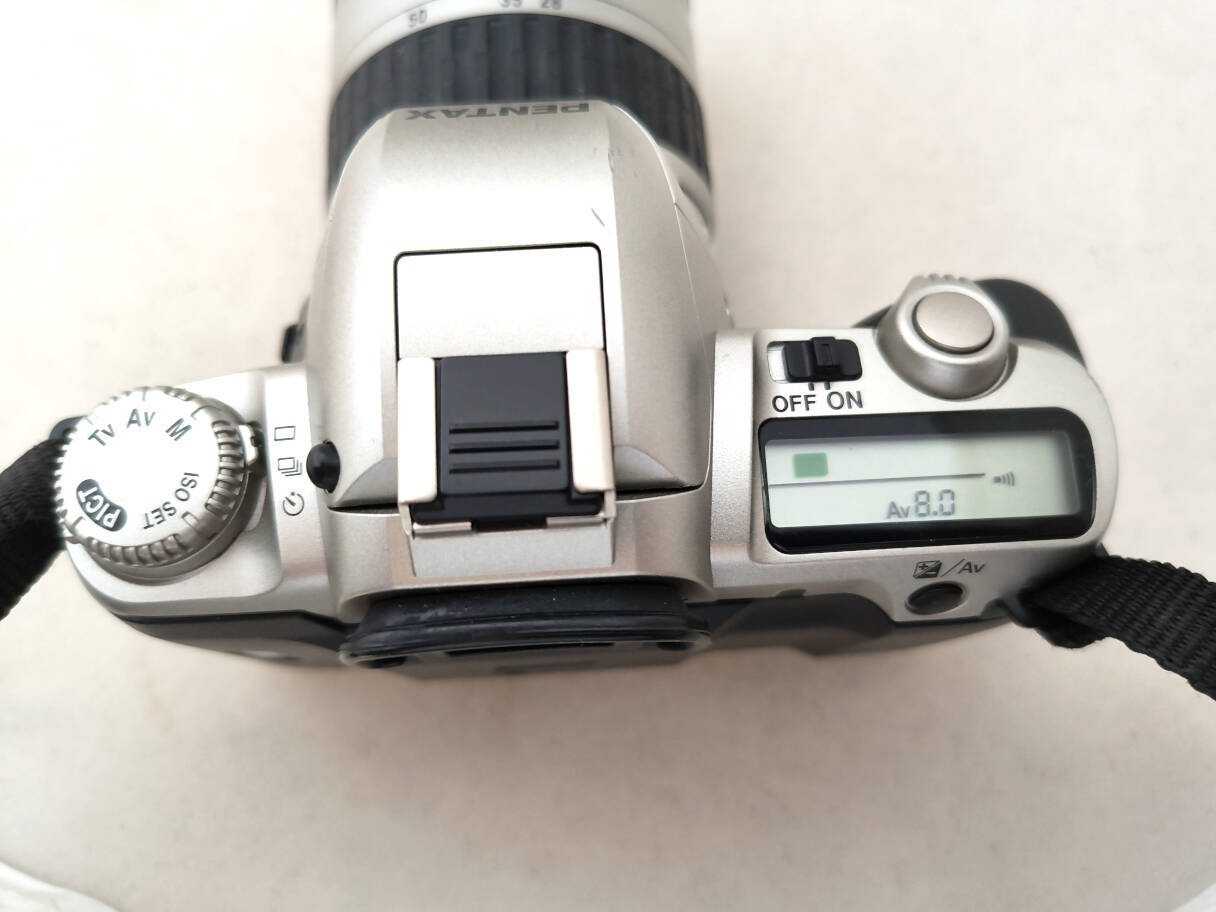
Aperture priority mode. With
the select switch you can cycle through the apertures, the speed will
appear if you half-press the shutter and blink, if it's not sufficient.
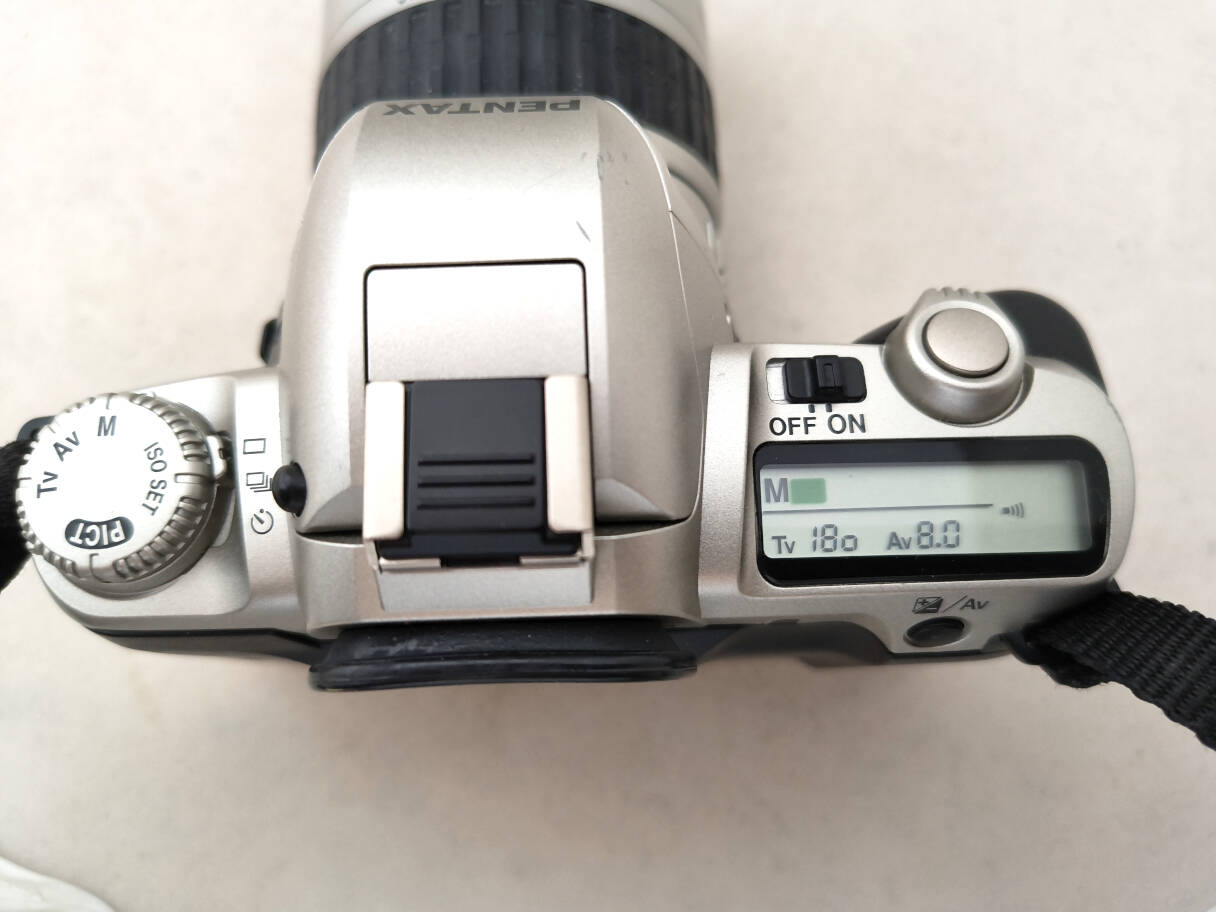
Manual mode. With
the select switch you can cycle through the speeds, holding the
exposure compensation button and moving the select switch changes the
aperture. If you half-press the shutter both will blink, if setting is
not sufficient.
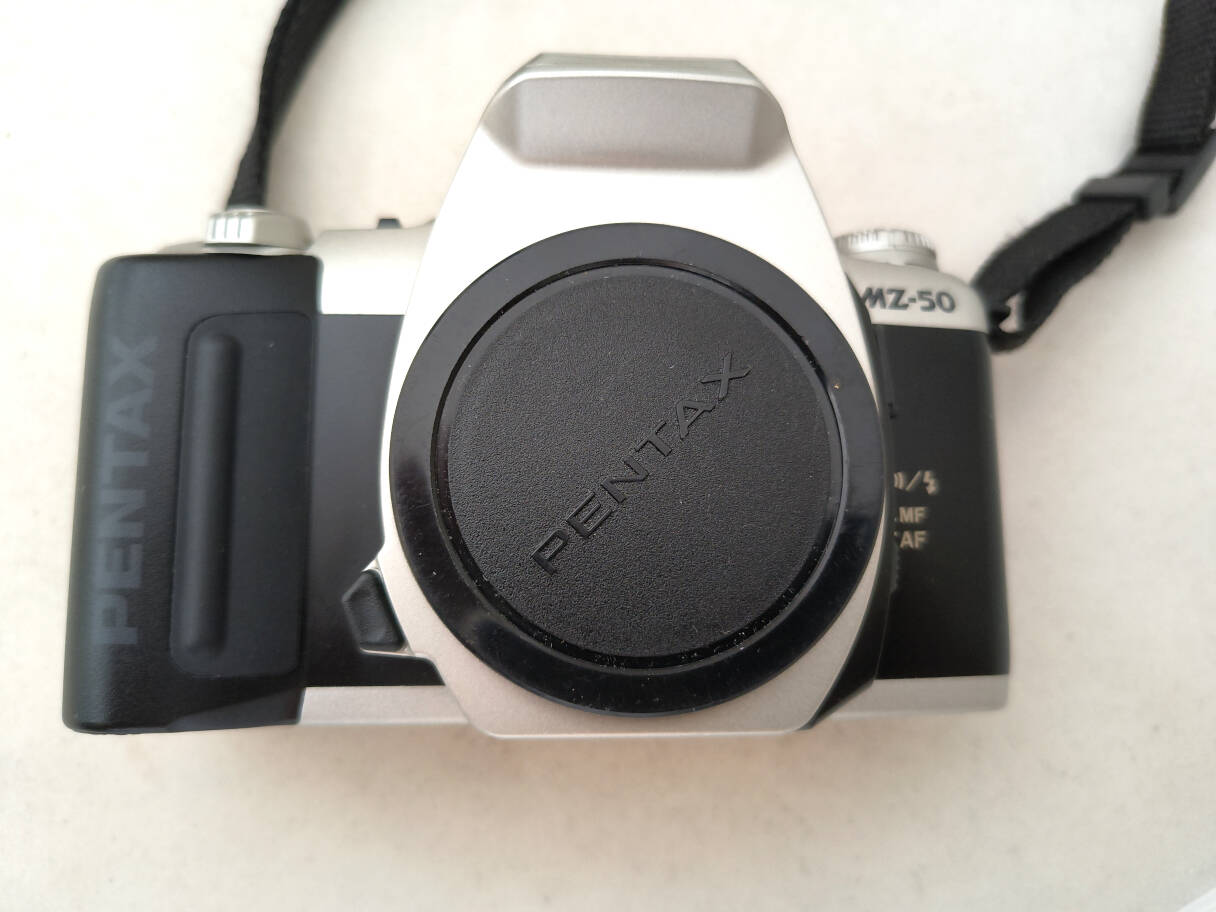
Camera with body cap.
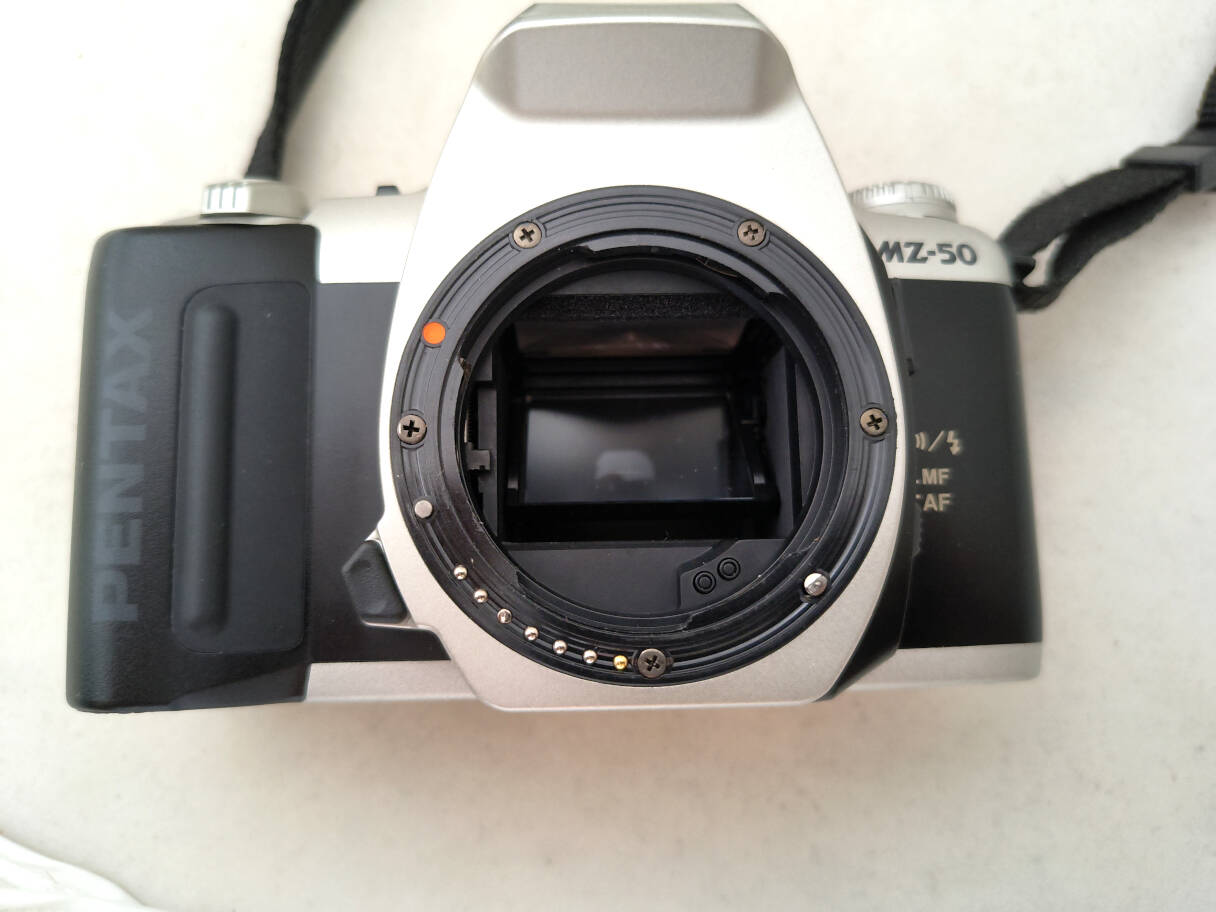
The KAF2 mount. On this camera it's plastic, but it it's not prone to
problems. Left, towards the bottom, lens release. Right: AF/MF switch
and button for flash mode and setting of focus confirm signal. Note the
bright red point on the mount which helps you to orientate the lens for
attaching.
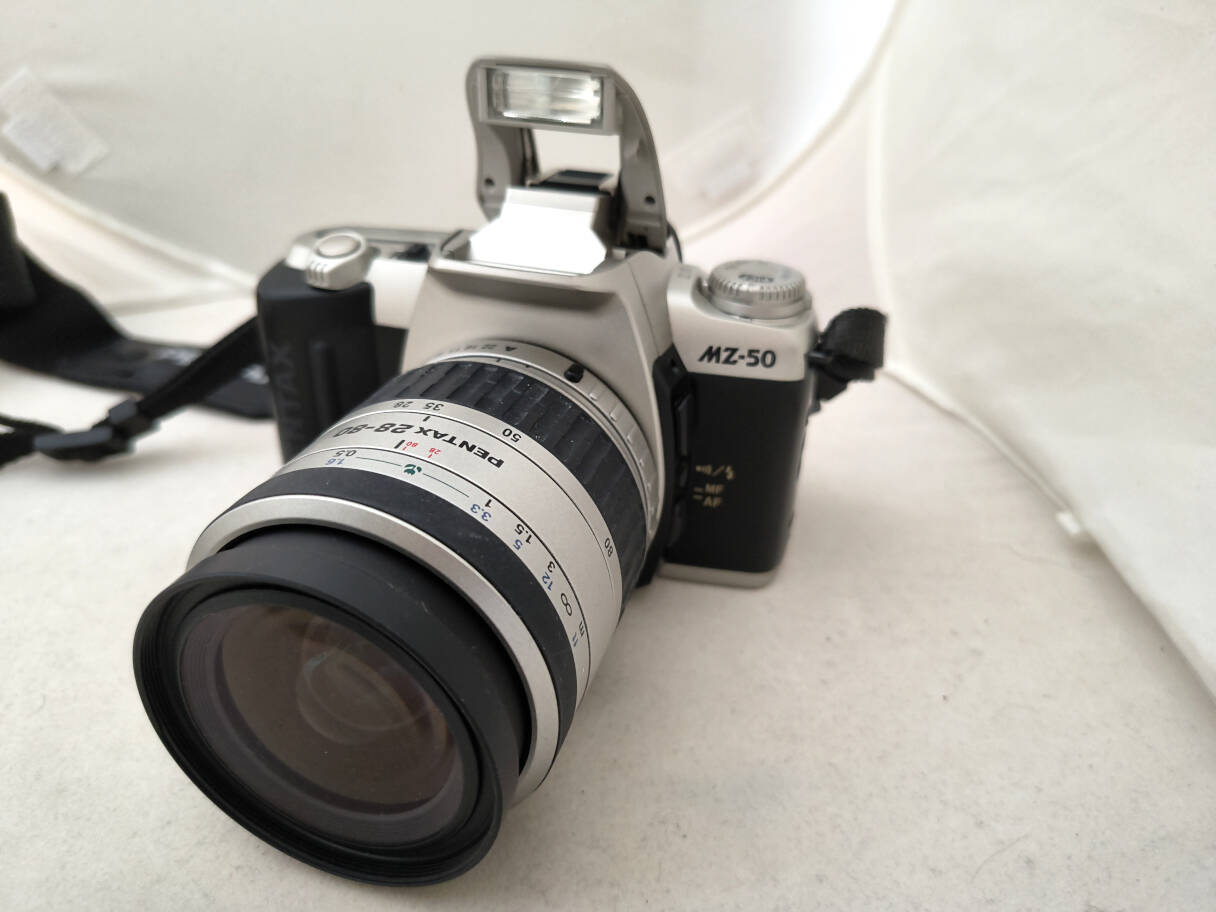
Flash extended. Guide Number 11 in metres at ISO
100. Hot shoe which can couple to dedicated flashes.
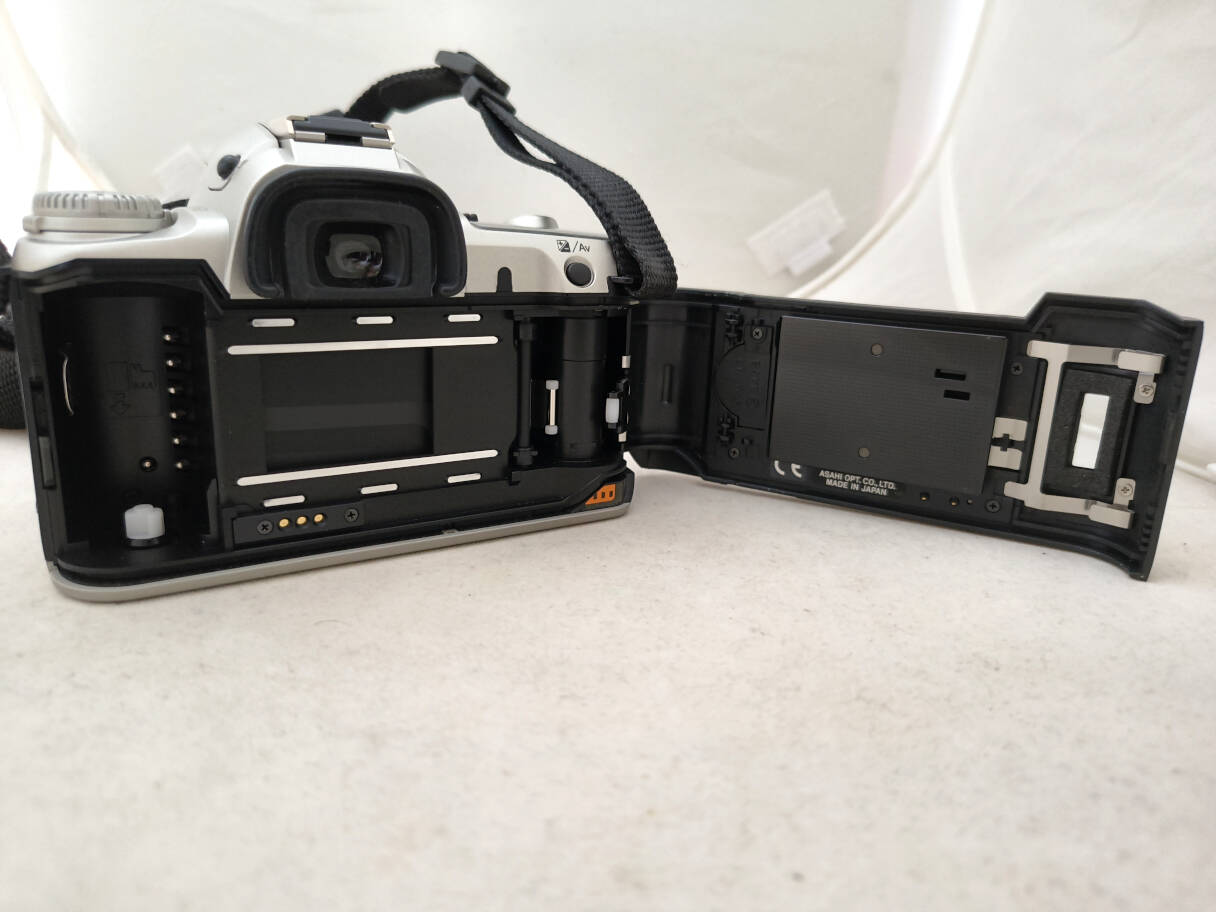
Film compartment.
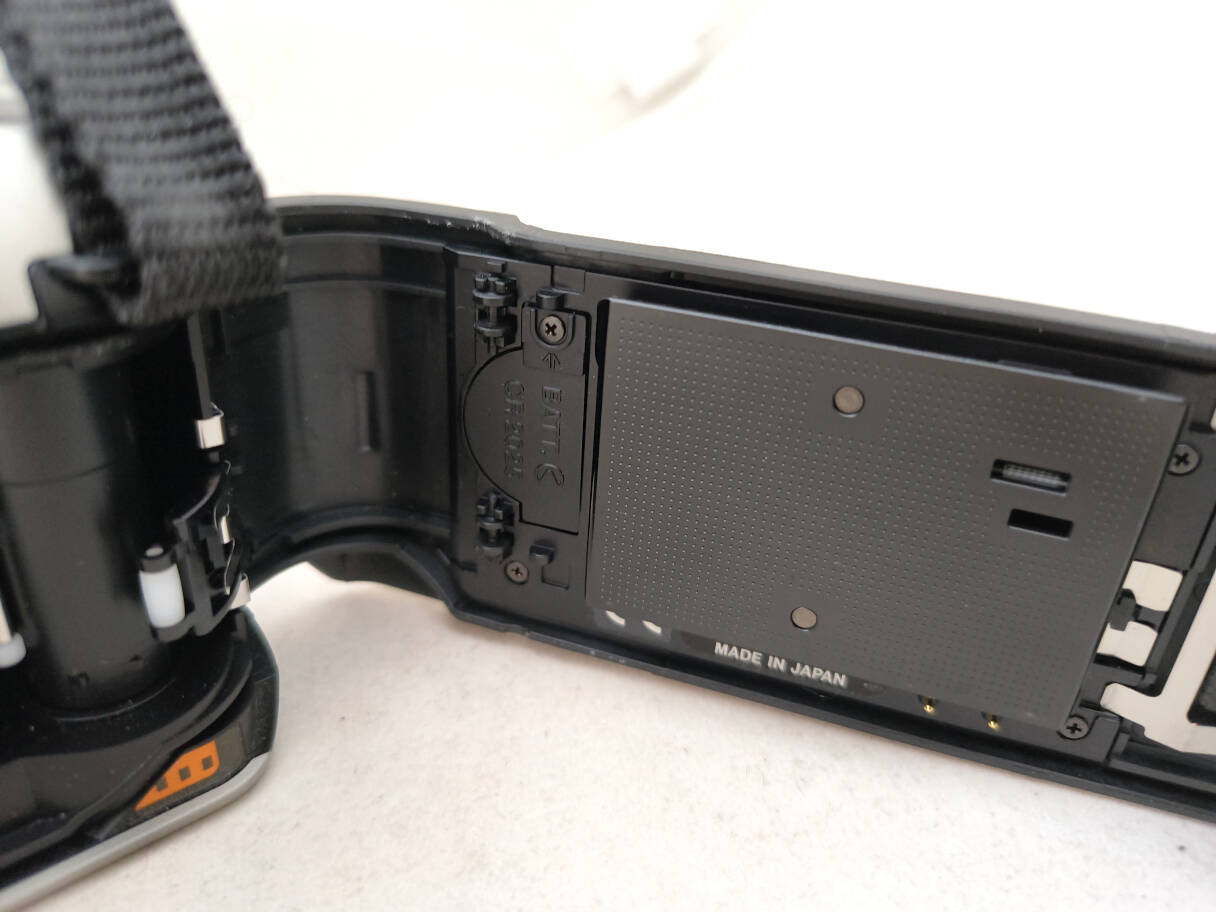
Battery cover for date back battery.
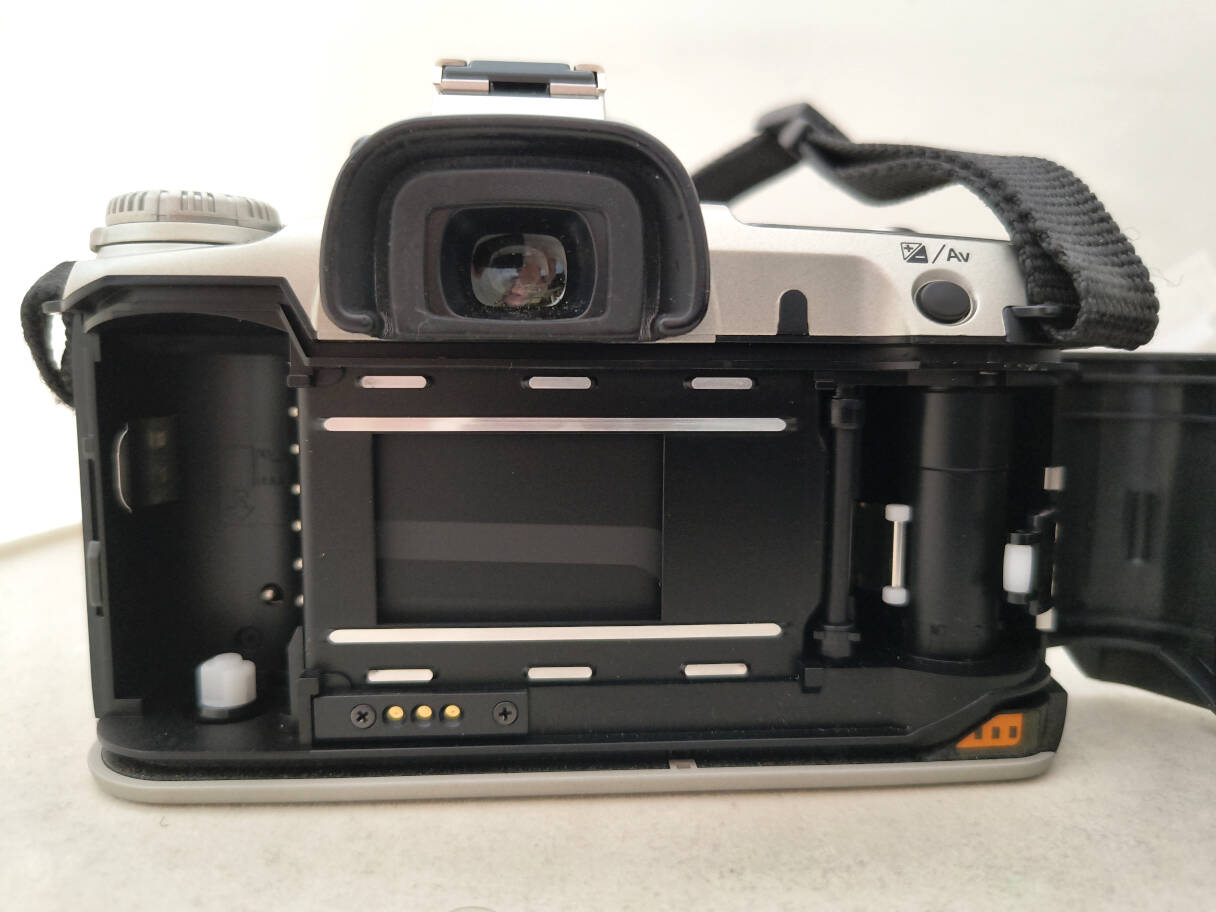
Film plane.
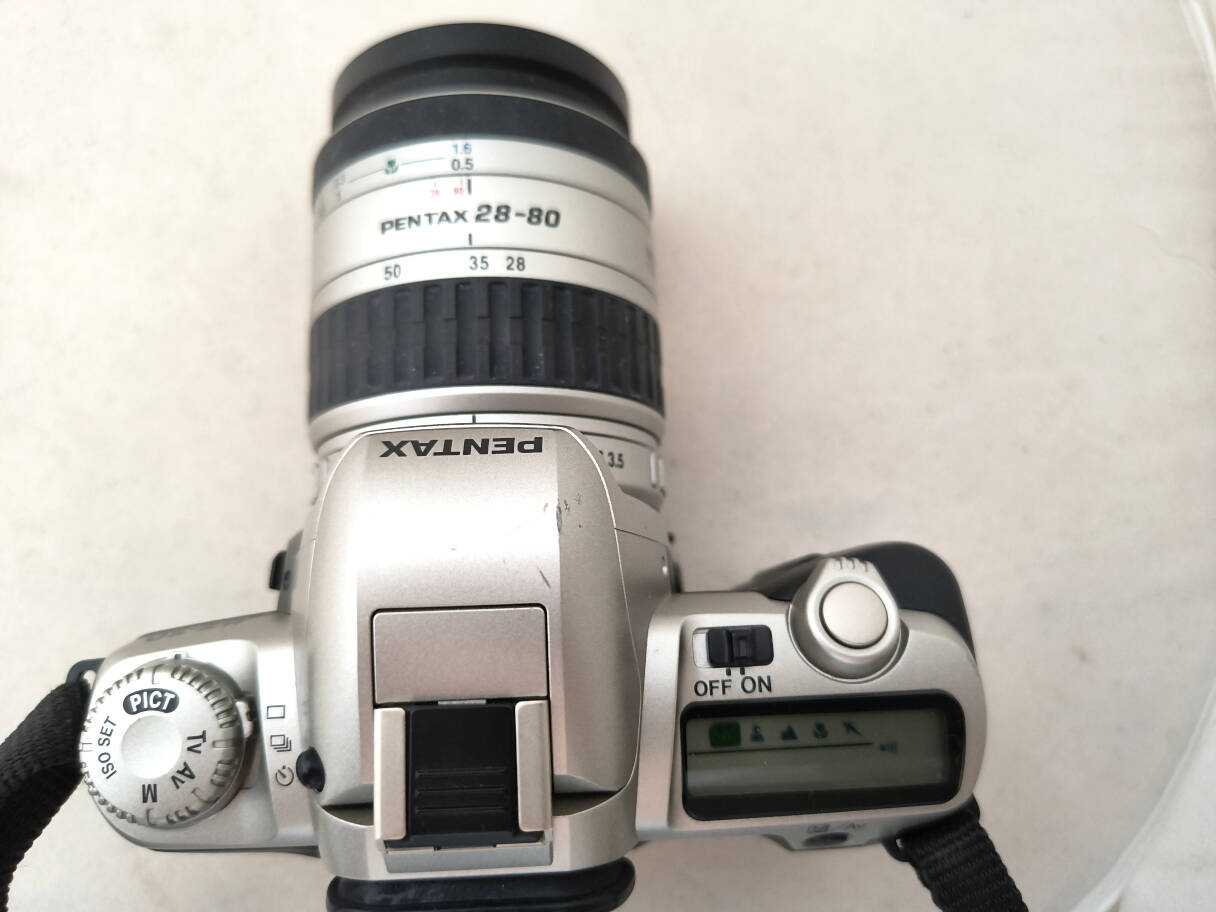
Camera,
28-80 zoom lens. This is one of the good standard
zoom lenses. The 35-80, even more common, is shorter.
Lens specifictions at shortest position: 80x63mm from flange. Weight 274 gr.
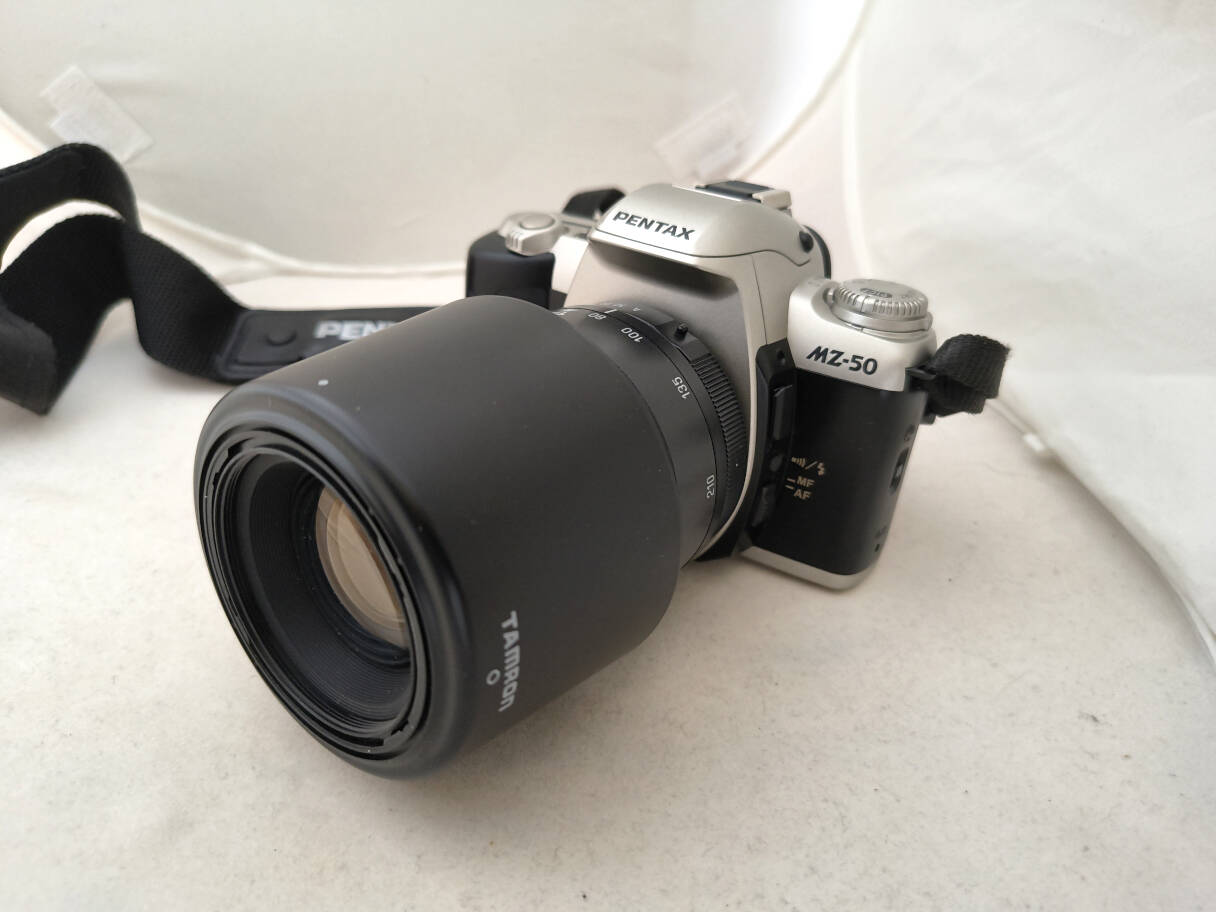
Camera with a Tamron 80-210mm zoom lens.
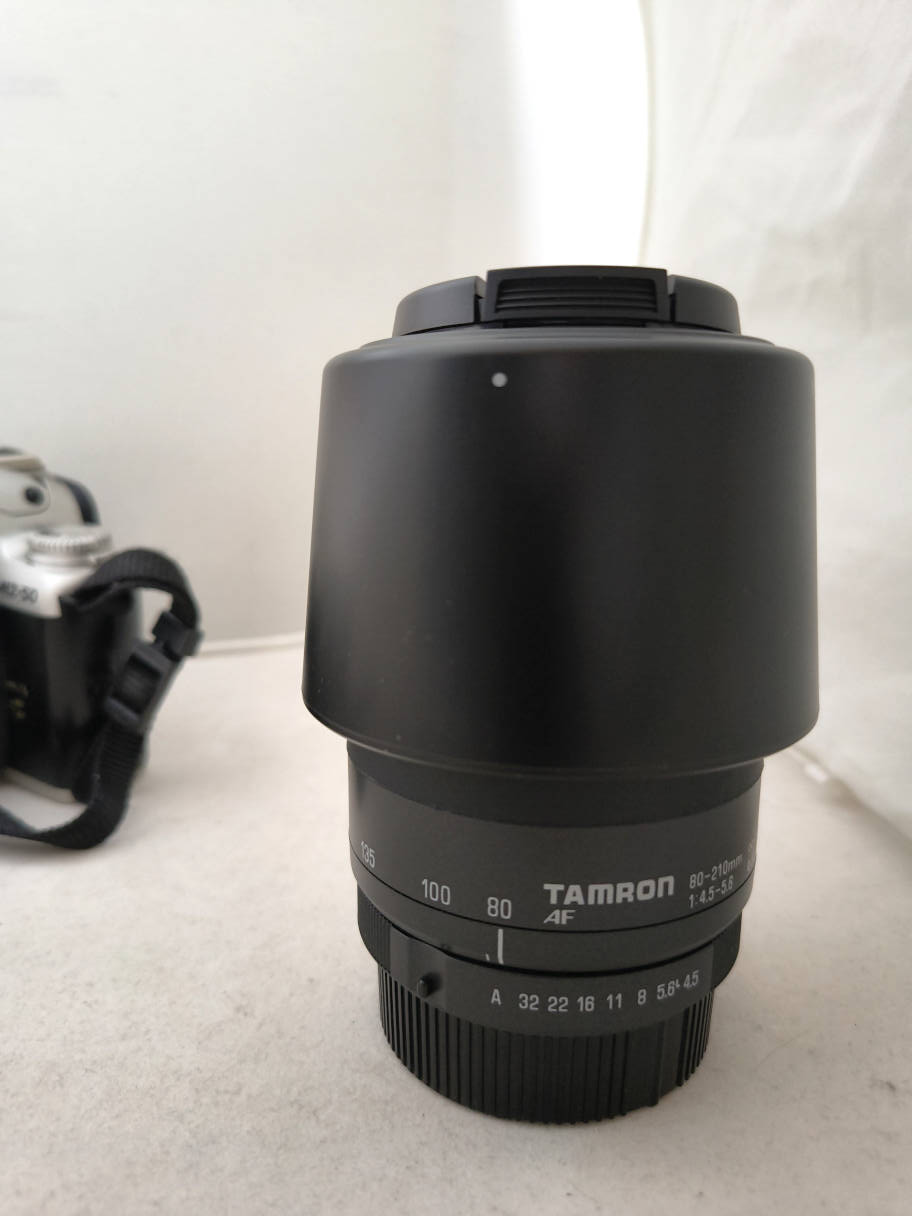
Lens detached. Lens shade inversed and fixed to the barrel.
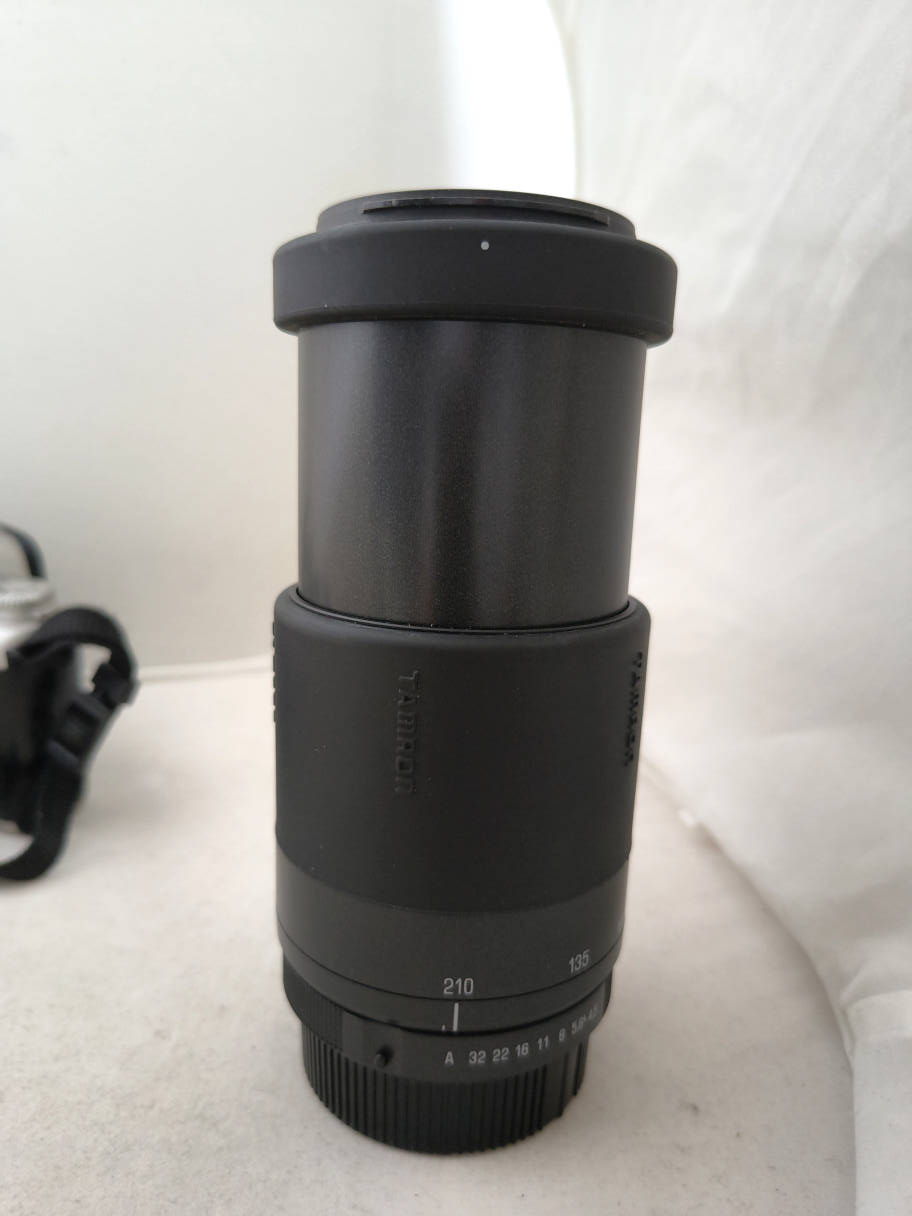
Lens fully extended and without shade.
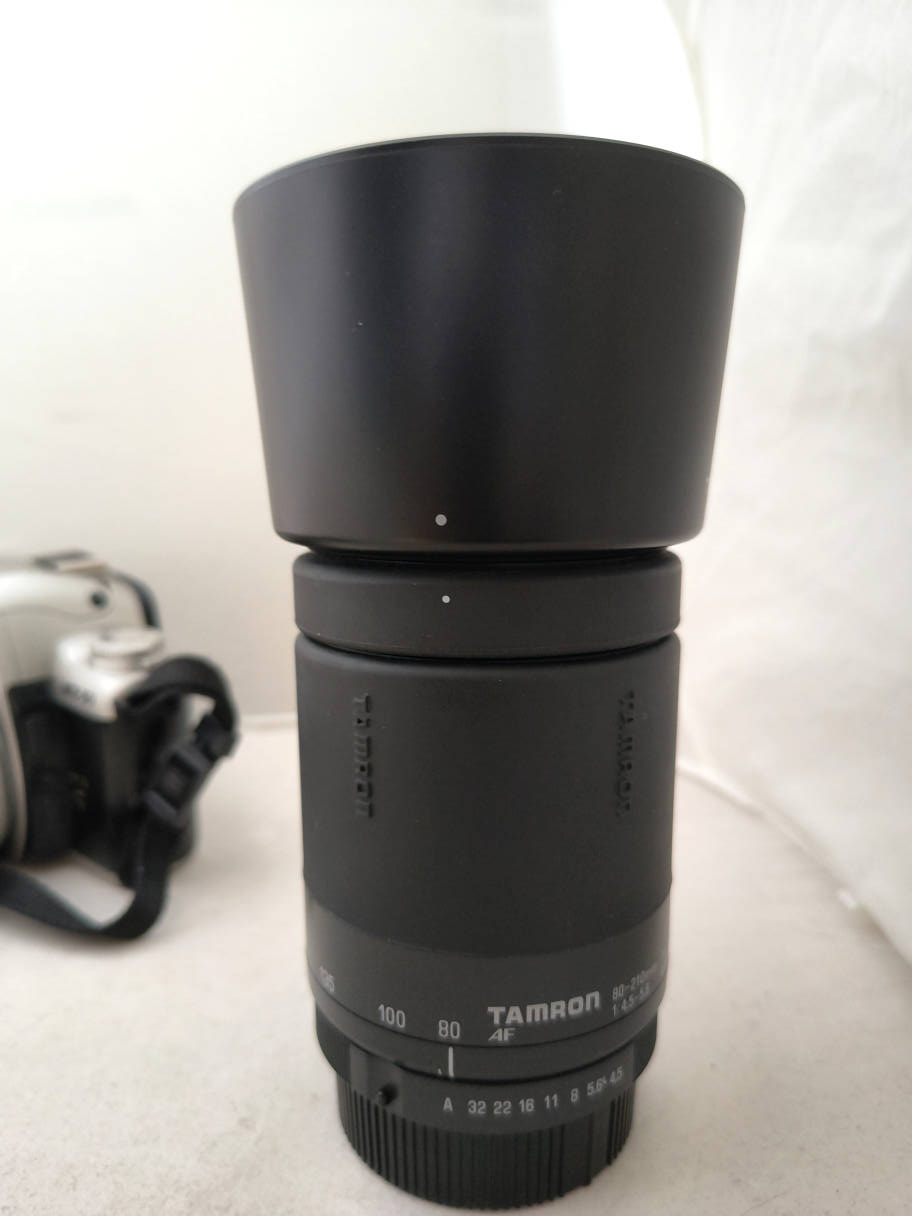
To attach the shade, match the 2 points. Then press down a little and turn clockwise...
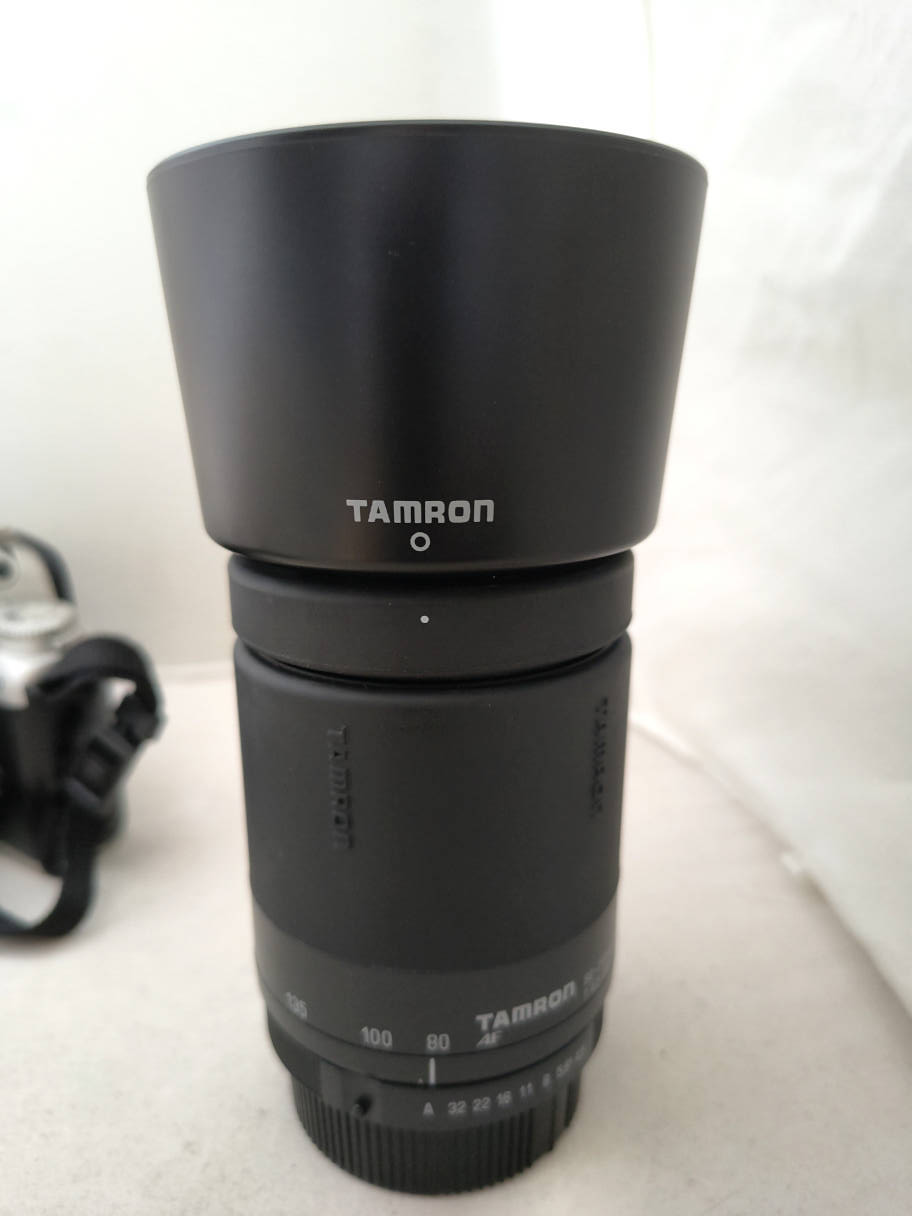
...until the point meets the other mark.
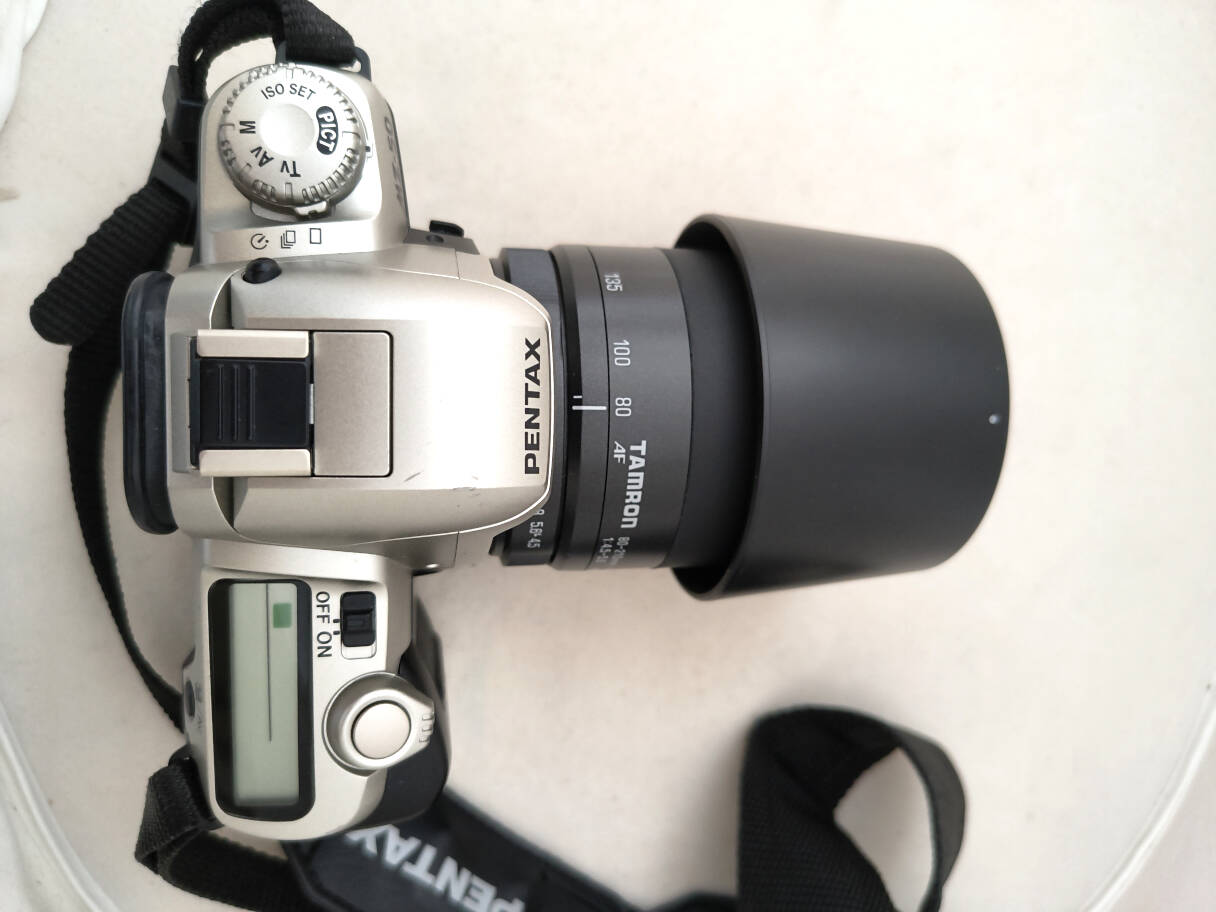
This lens is very compact.
Lens specifictions at shortest position: 100x68mm from flange. Weight 337 gr.
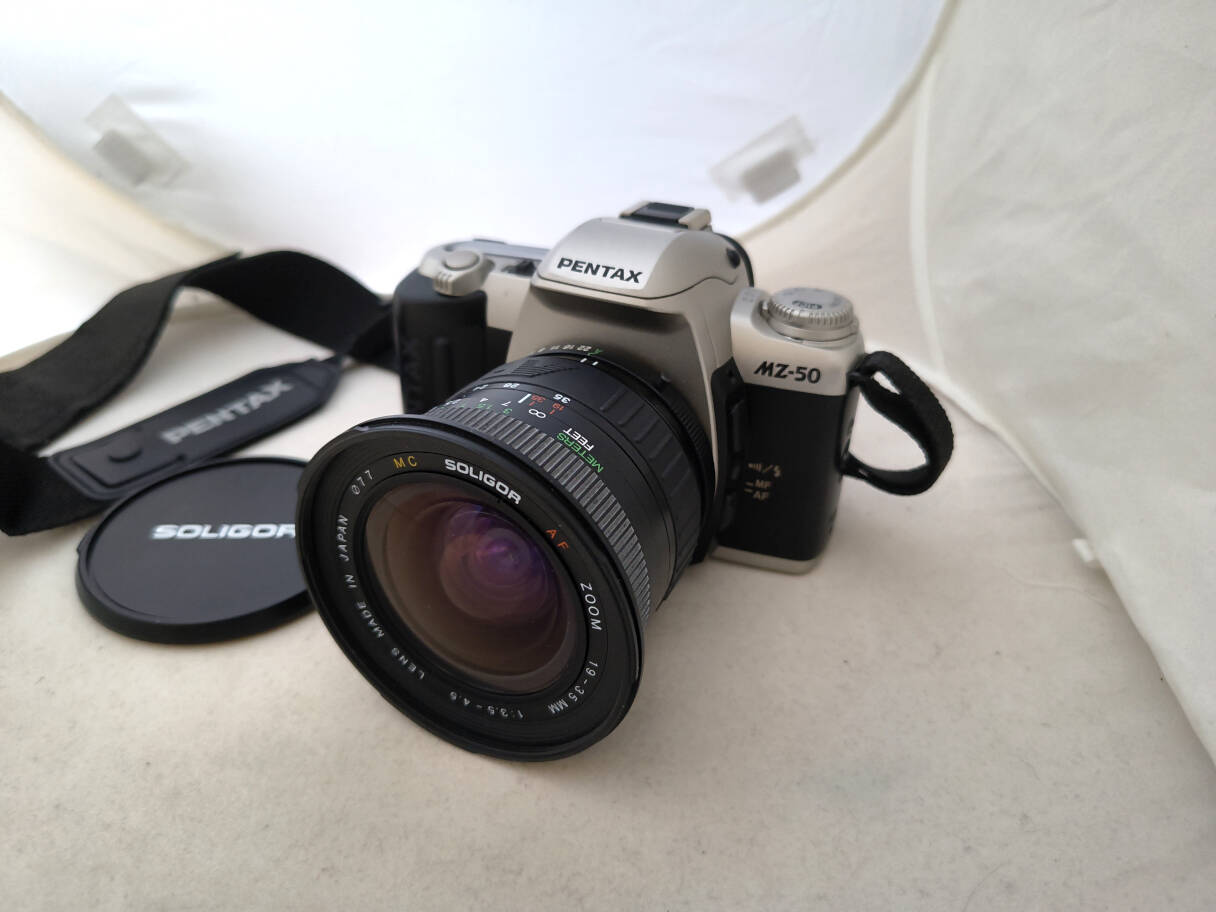
Camera with 19-35mm ultrawide Soligor zoom lens.
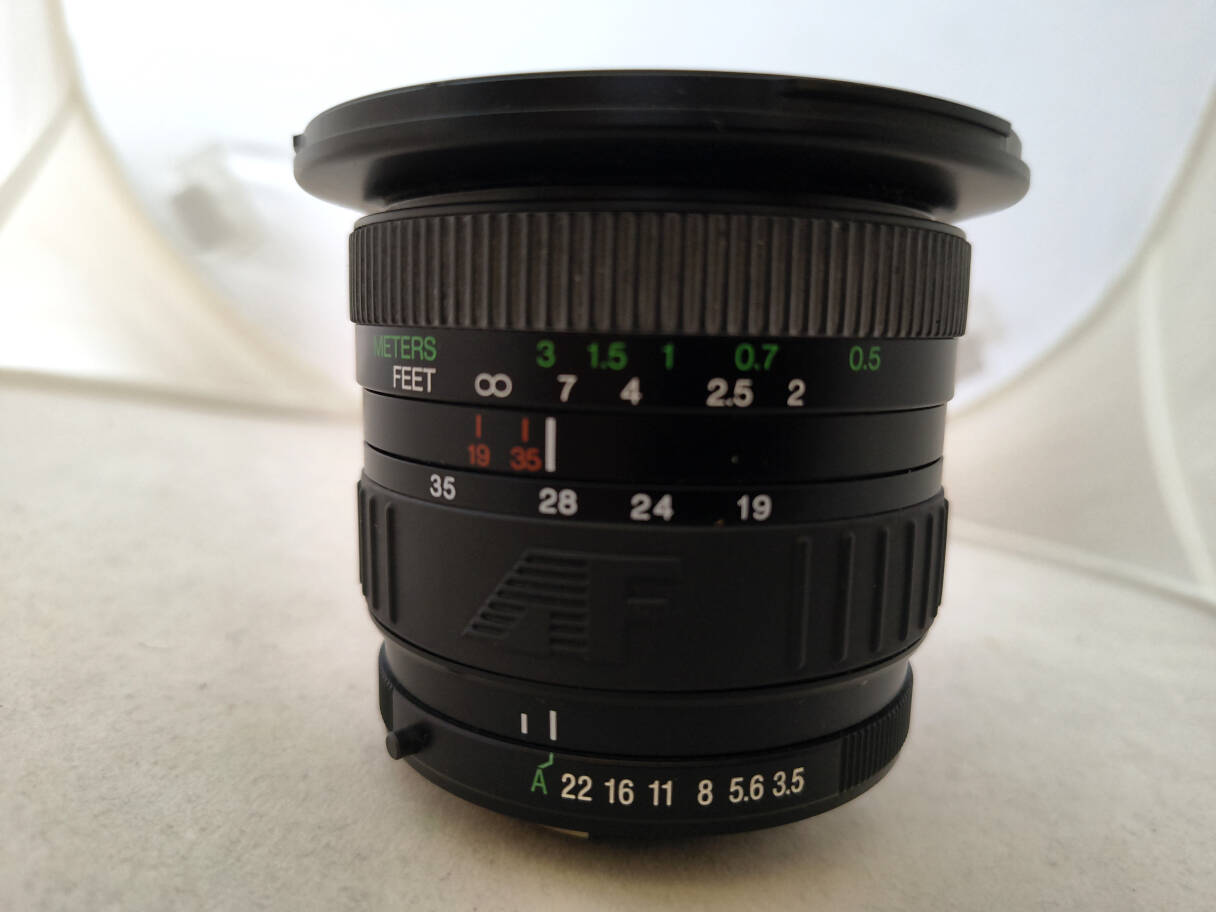
Lens detached.
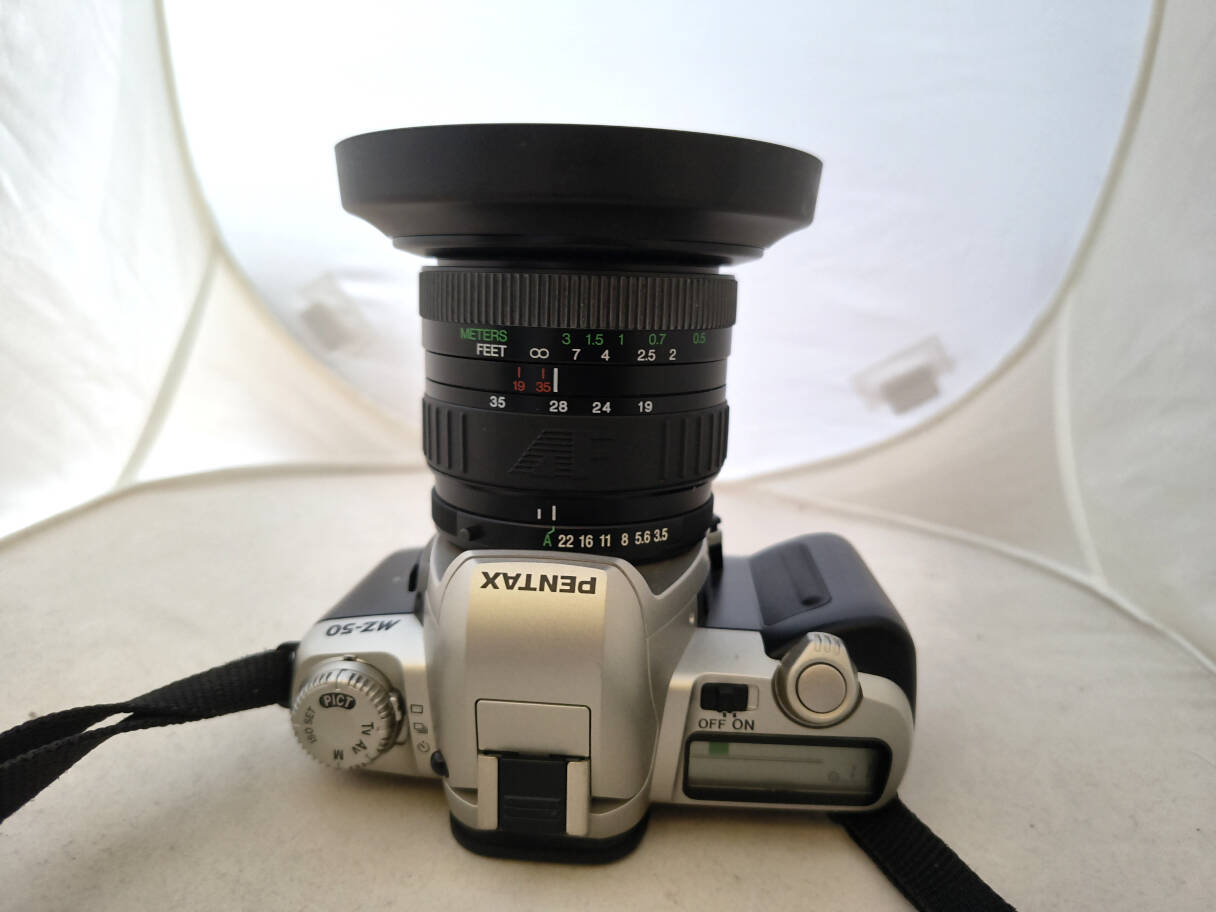
Lens with its shade.
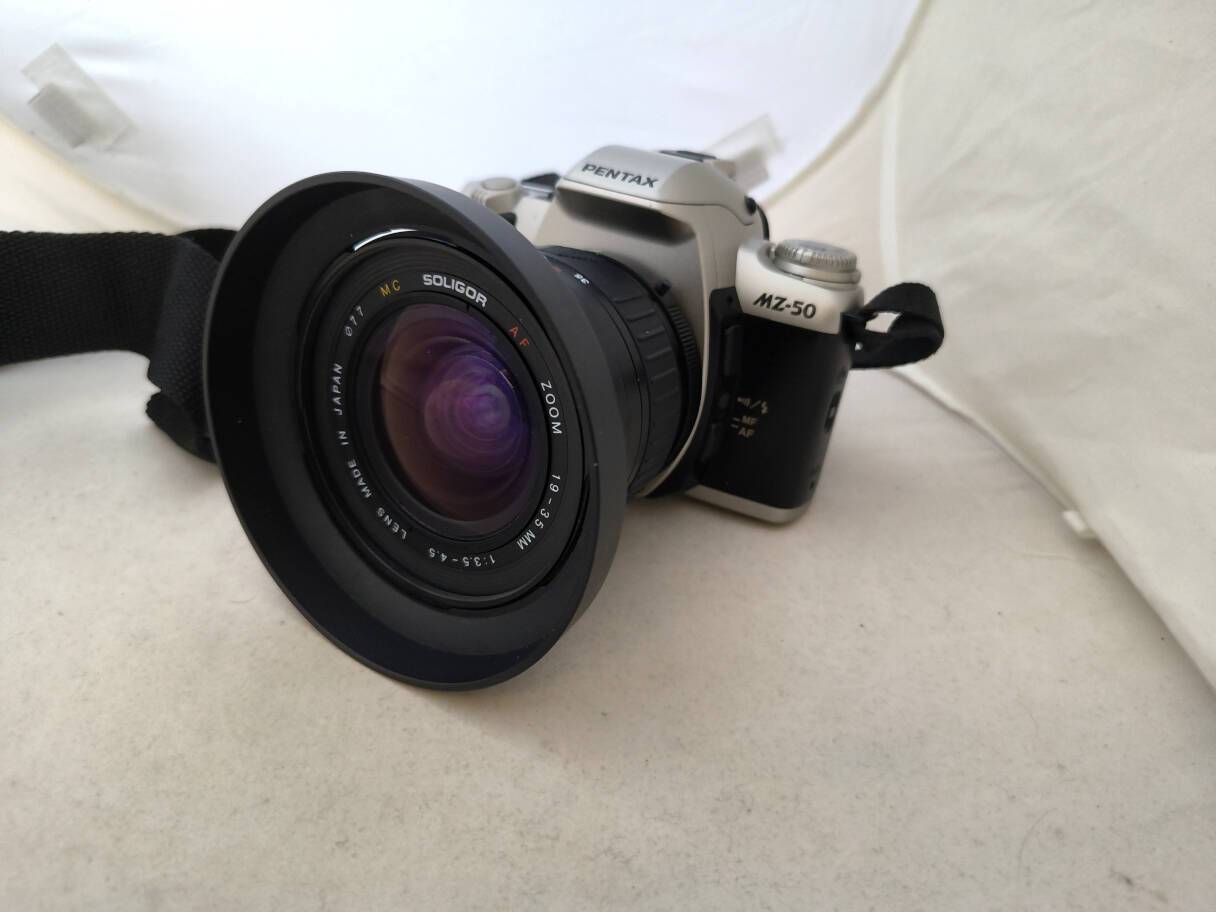
The diameter of the shade is huge.
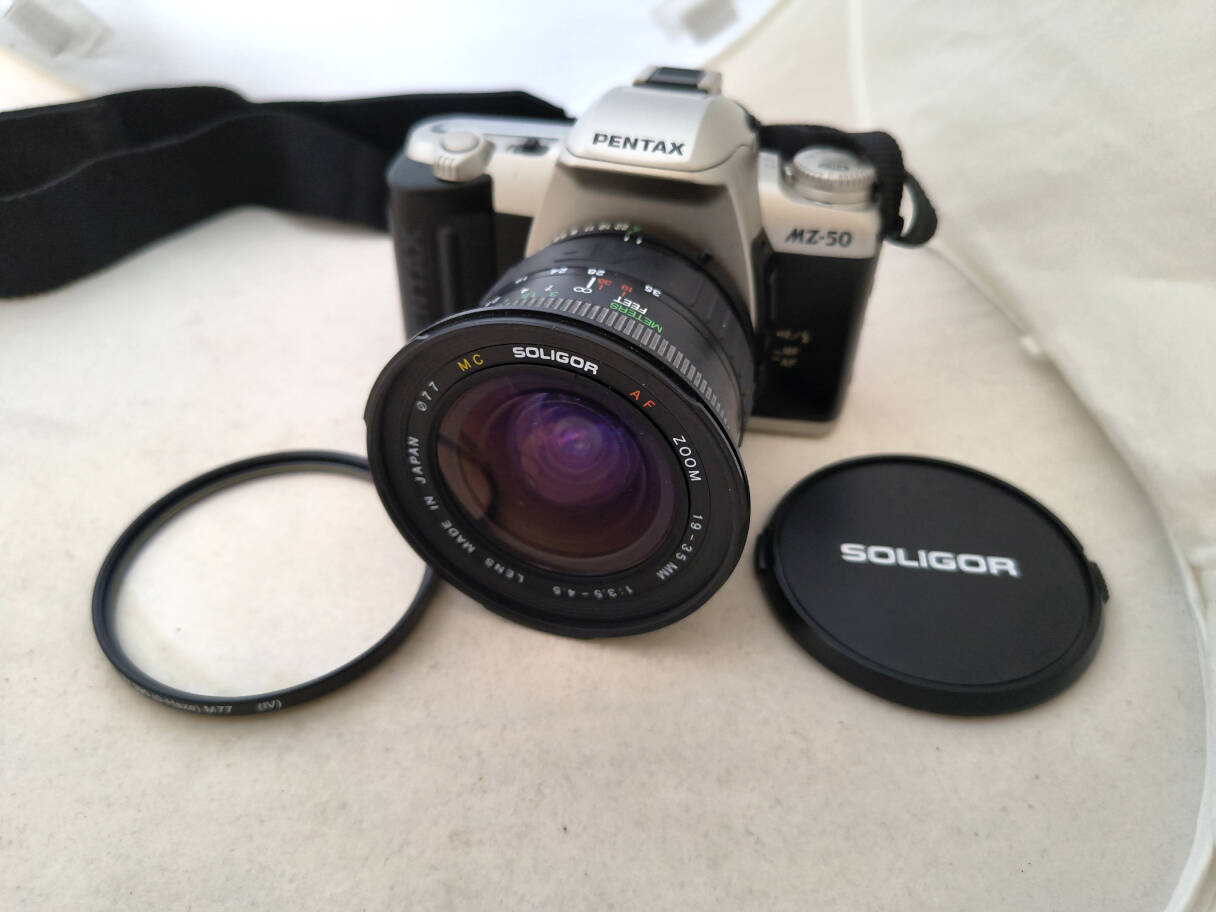
It needs a huge 77mm filter in case of.
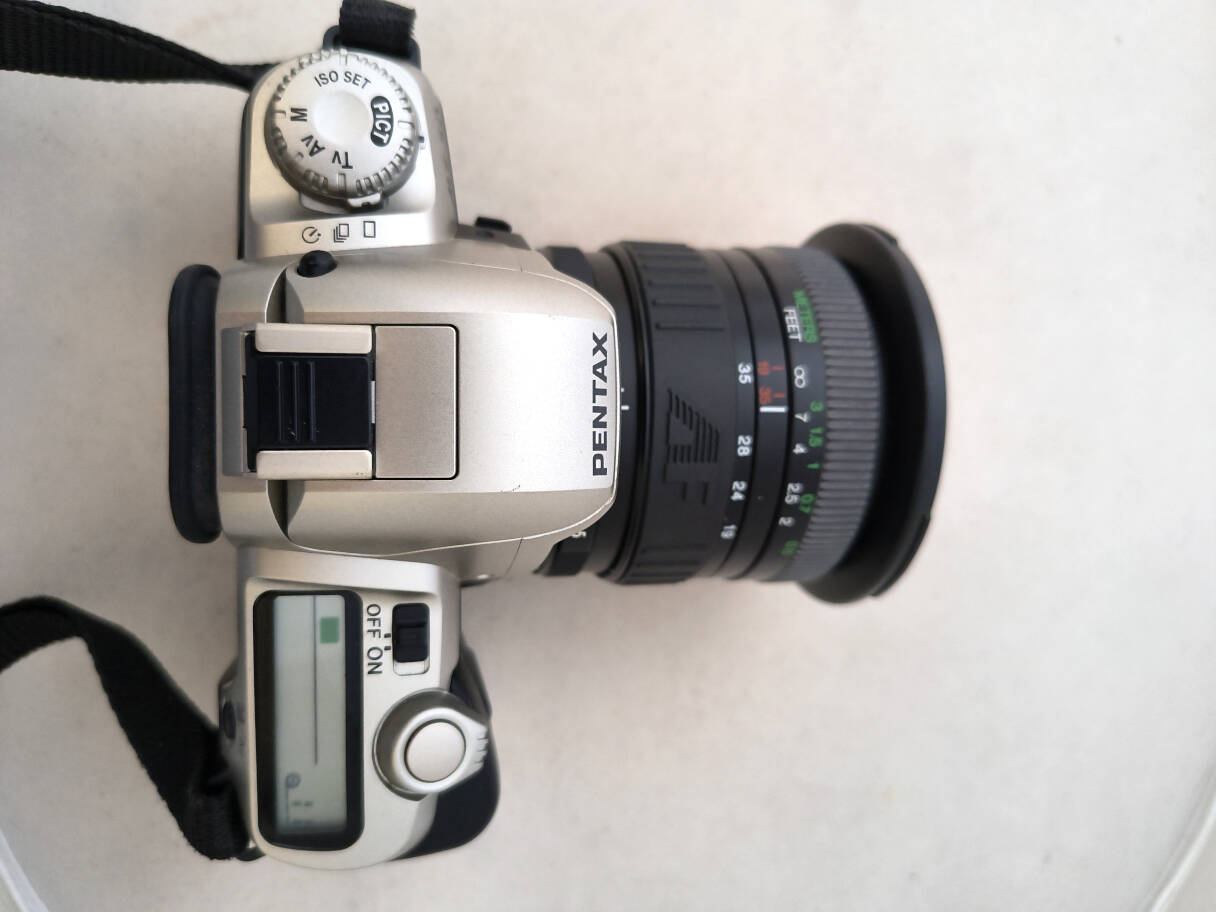
The lens is very short.
Lens specifictions at shortest position: 68x75mm from flange. Weight 307 gr.
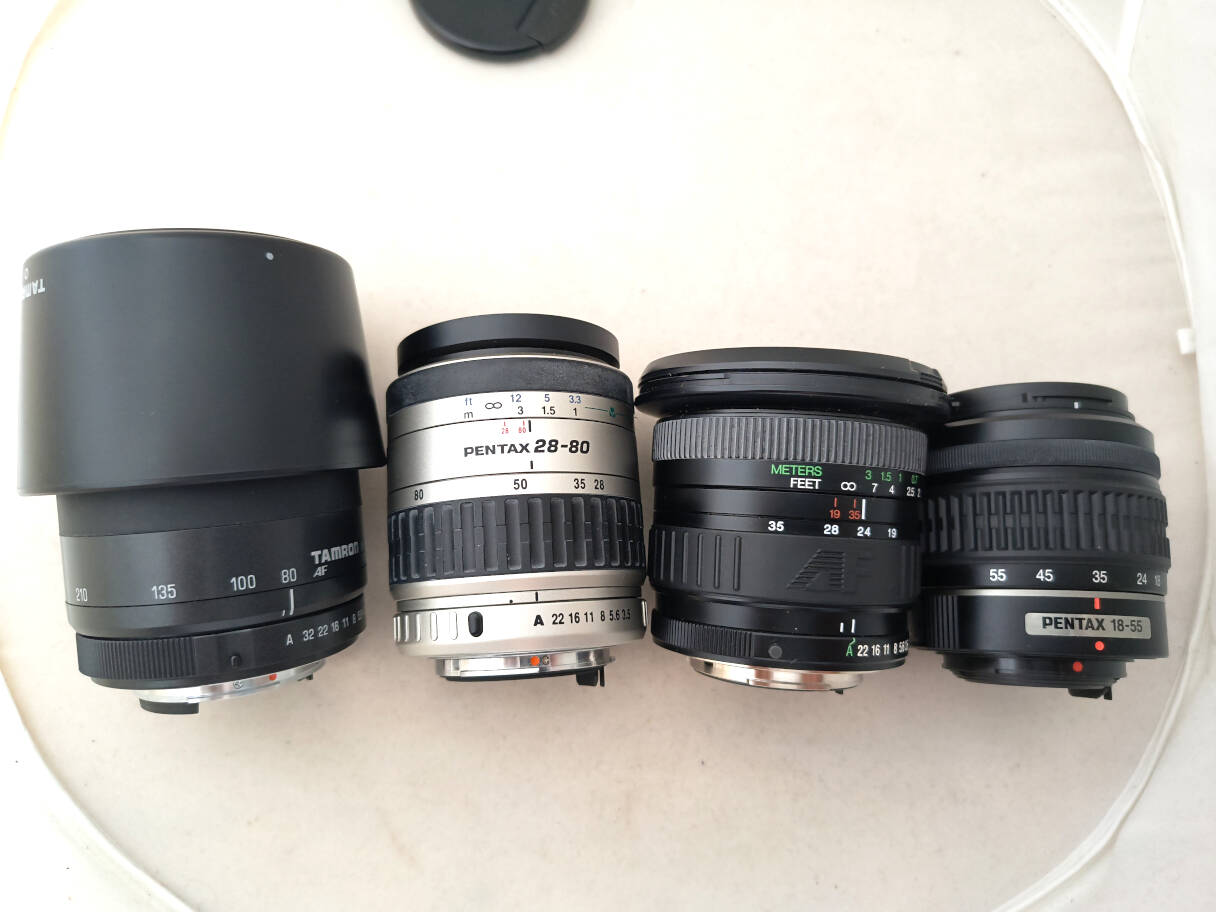
4 lenses in comparison. From left: 80-210 Tamron, 28-80 Pentax, 19-35
Soligor and a 18-55 Pentax digital, which would not cover full fomat.
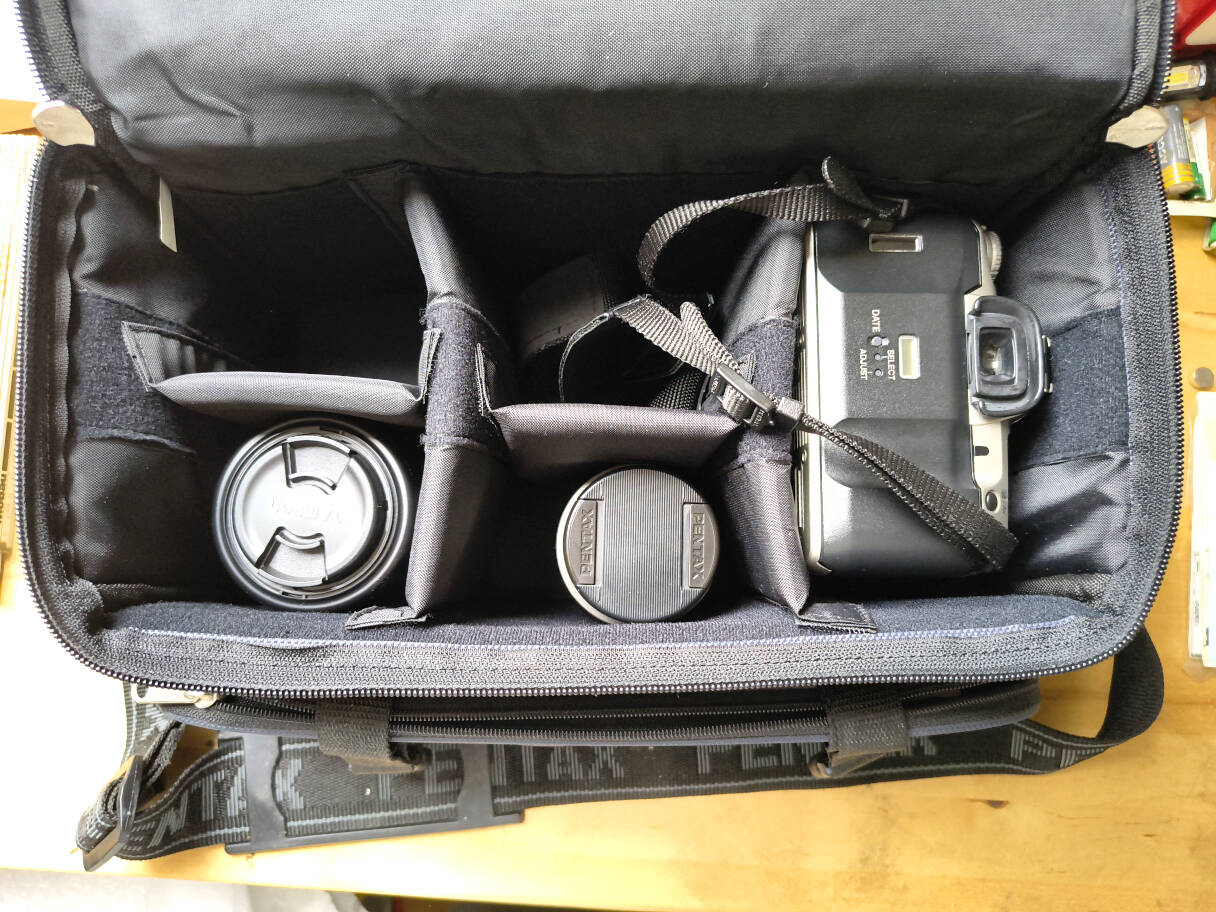
A big original Pentax case.
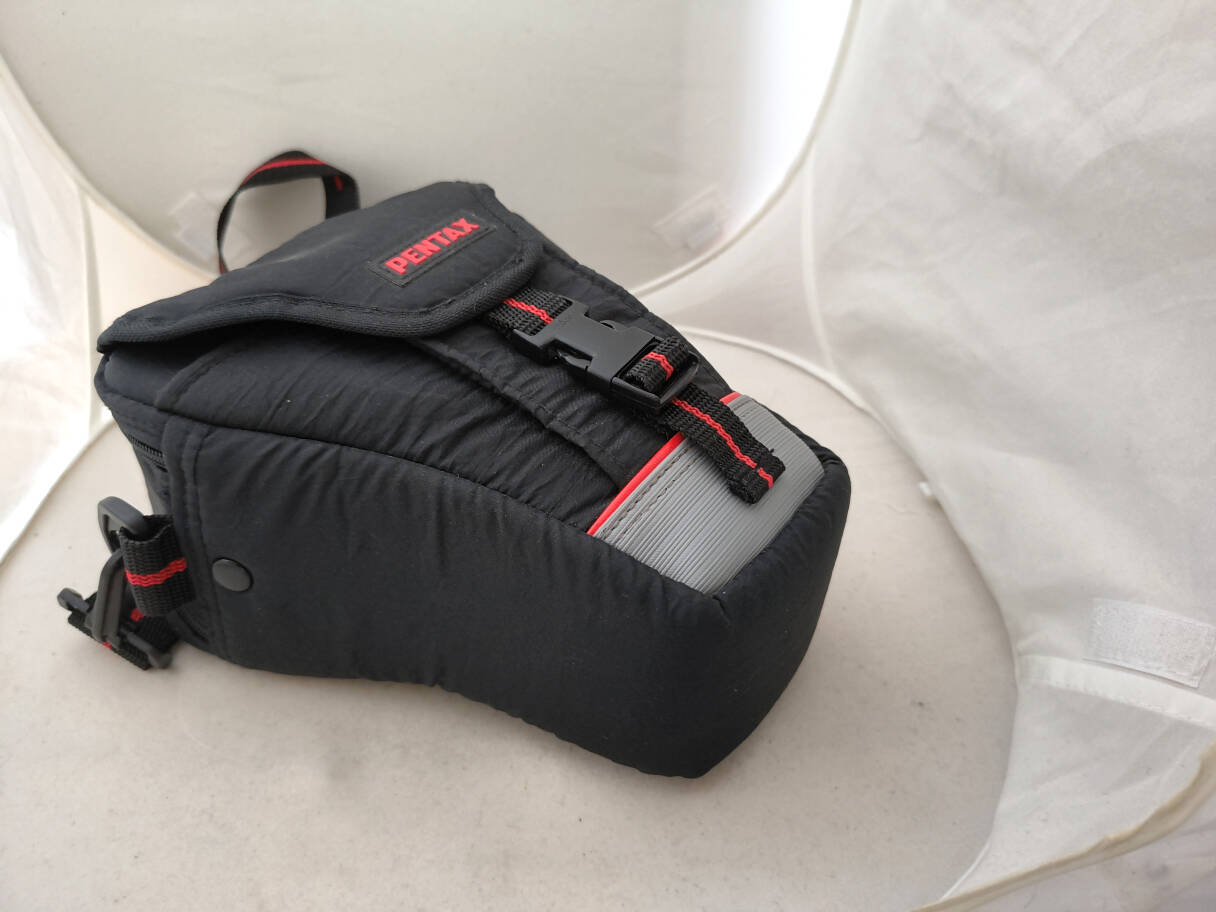
A small original Pentax pouch.
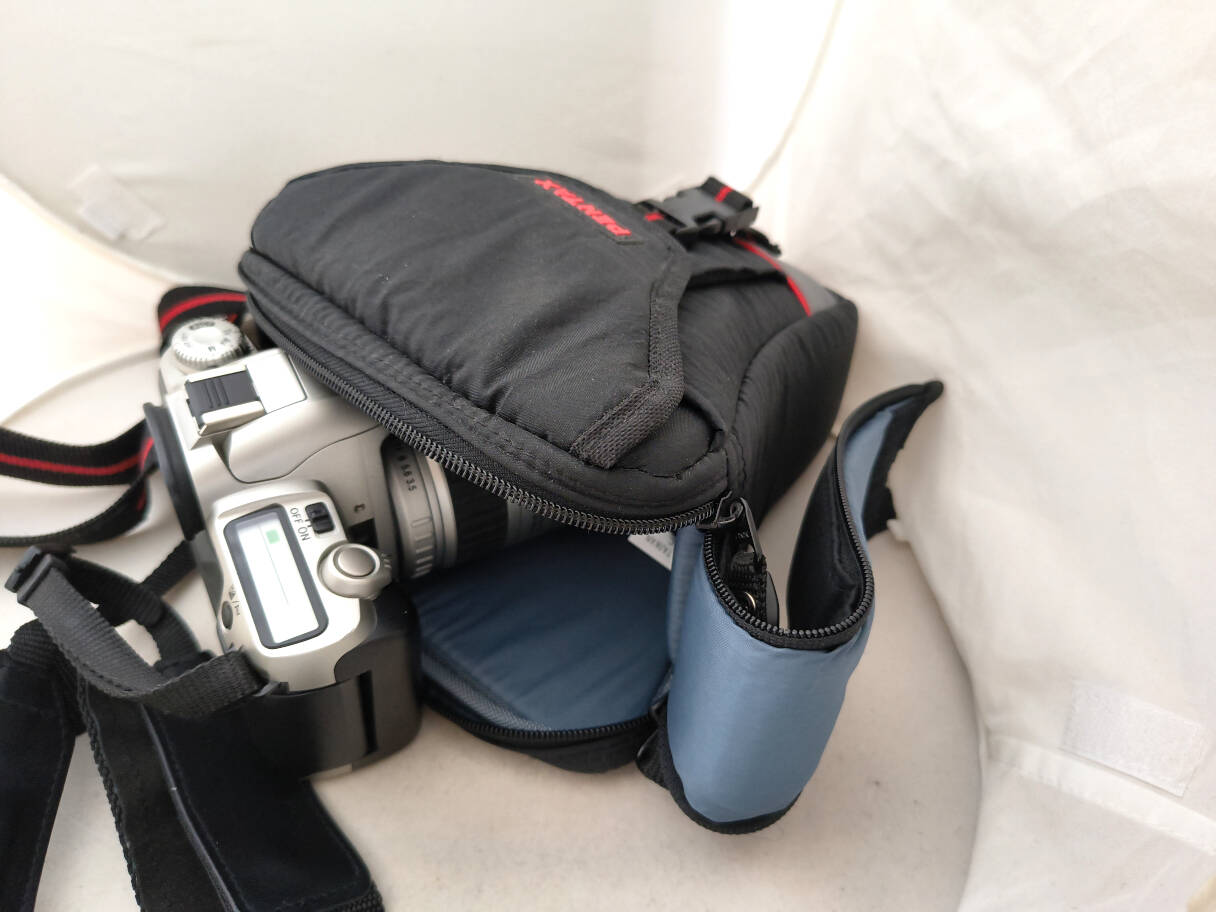
Just fits a camera with a zoom lens.
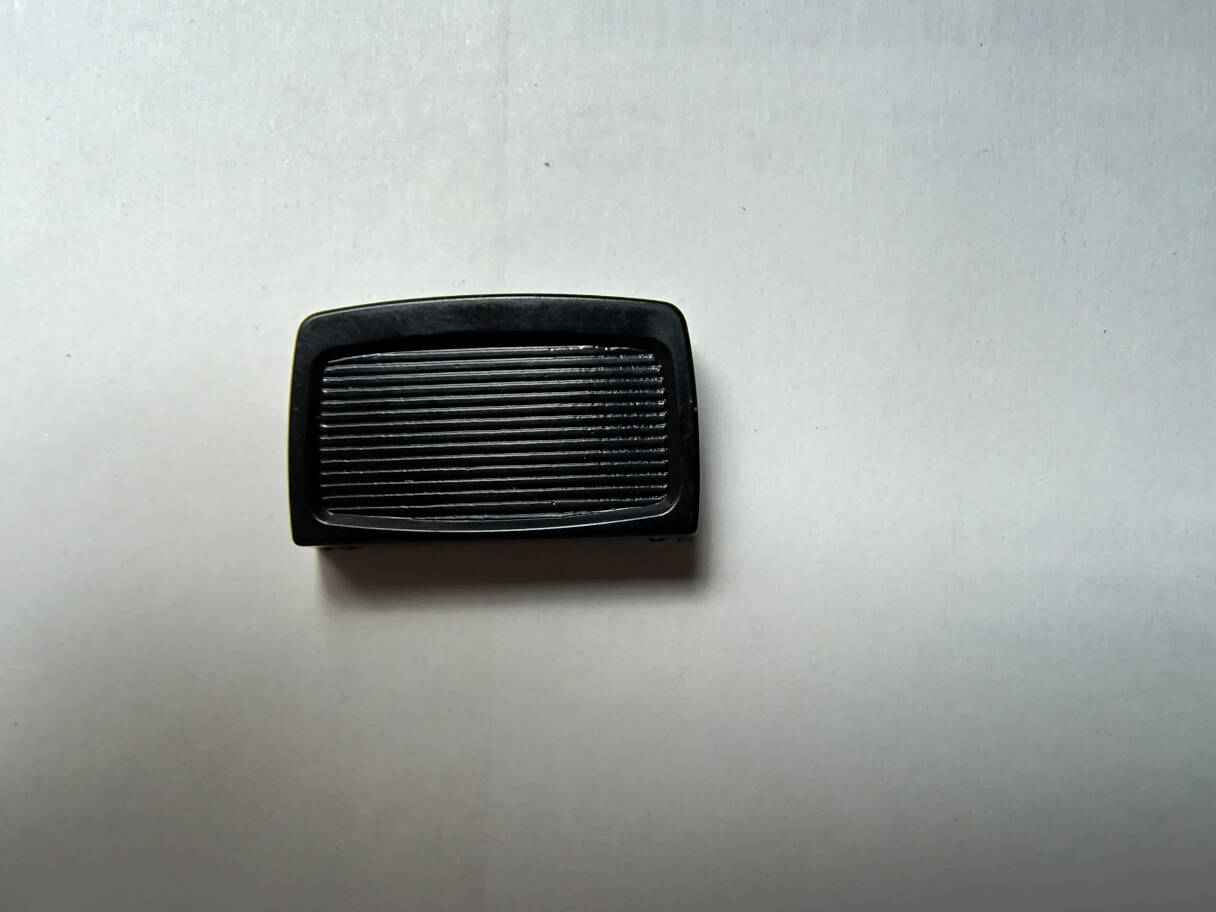
Last,
but not least: an important accessory if you want to take long exposure
night photos: a cap for the viewer. If light strikes the viewer, it
might falsify the automatic exposure.
This is a decent, very light SLR camera with a good lenses that can be
bought
for cheap. A very good start if you want to get into real
film cameras. It has several point-and-shoot modes if you want this,
but can also be used very well in manual mode. A very nice find.
I bought these cameras because I wanted to know how they feel before
ordering a modified Reflx Lab half frame MZ-50. The half frame model is
here.