OddCameras.com
Olympus Pen F
As the Pen F is functionally different from the FT, so I made a separate page for it here.
The
Oympus Pen series is a brand name for half frame compact cameras from
1959 until the early 1980s by the Olympus Co, Tokio, Japan, an old
camera company. The original Pen was introduced in 1959. It was
designed by Yoshihisa Maitani, and was the first half-frame camera
produced in Japan. It was one of the smallest cameras to use regular
35mm film. A series of Pen models followed, some easier to use with
automatic exposure.
The Pen F is a half frame SLR camera, introduced in 1963. It is also designed by Yoshihisa Maitani
(who later created the OM-1 and the XA). The original model has a big
golden gothic letter F engraved on the right on the front plate. It's a
quite compact camera with an unusual viewfinder with no prism. The
reflex mirror flips sideways, which makes it more compact.. The Pen F
has a bayonet mount for interchangeable lenses. The focal plane shutter
is unusual as well, it's a rotating metal disc, synchronised at all
speeds. It's the model presented here.
There is a sophisticated accessory light meter for this camera. It's pictured and described further down the page.
The Pen FT with a built-in, non-coupled TTL exposure meter replaced
the Pen F in 1966. The finder image is slightly dimmer, since some
light is directed to the meter. The Pen FT also introduced a
single-stroke advance and a self-timer.
The Pen FV was launched in 1967. It's a Pen F (without the light meter),
but with the single stroke lever and the self-timer. It is the most
rare of the three models. Unfortunately in 2016 Olympus introduced a
digital Micro Four Thirds camera with the iconic Pen F name which
leads to quite some confusion.
You can find an accessory page here.
The main features are:
Shutter: rotary, metal, speeds: 1 - 1/500s and B
Viewfinder: Porroprism with microprism and fresnel
Focus: manual
PC socket (fully synchronized), tripod mount
Some photos:
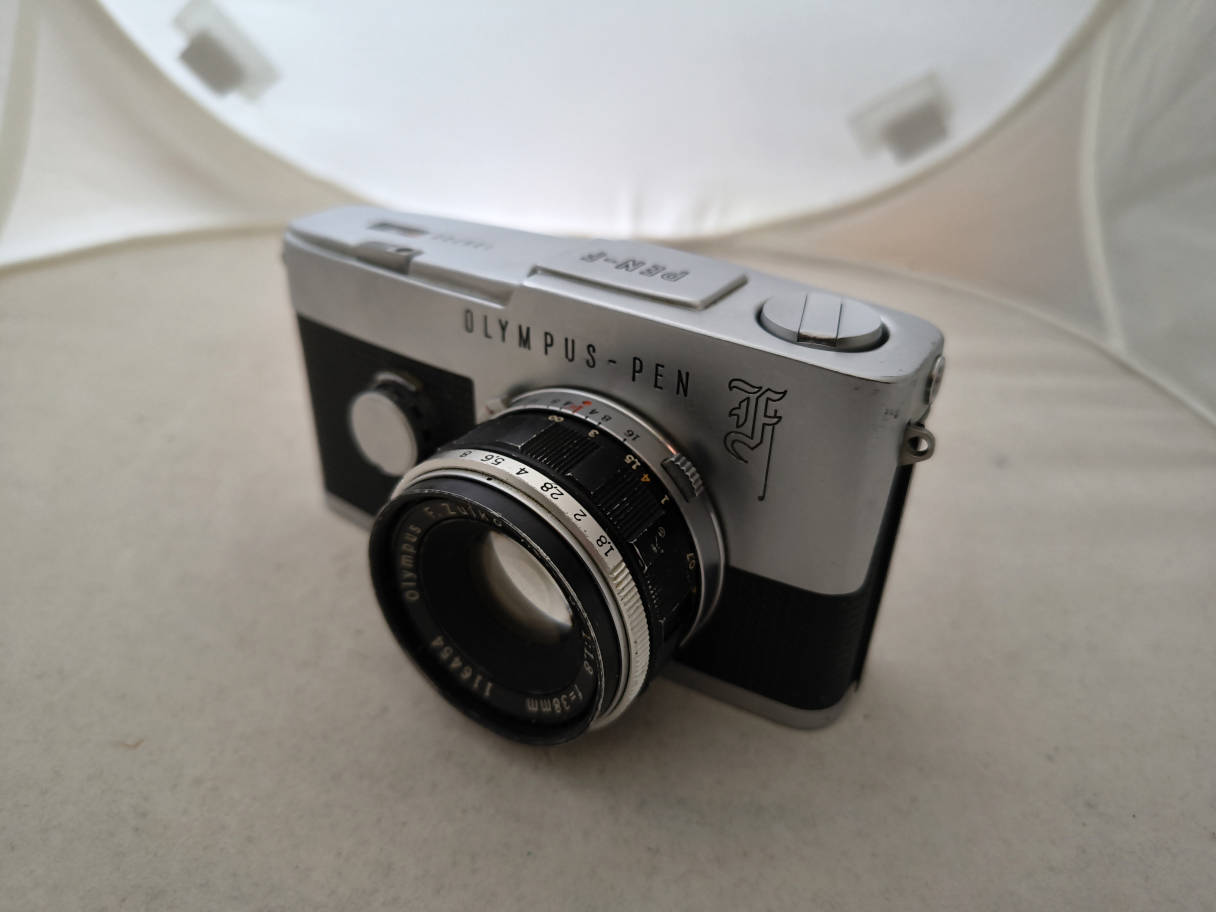
A cute small camera with sover design.
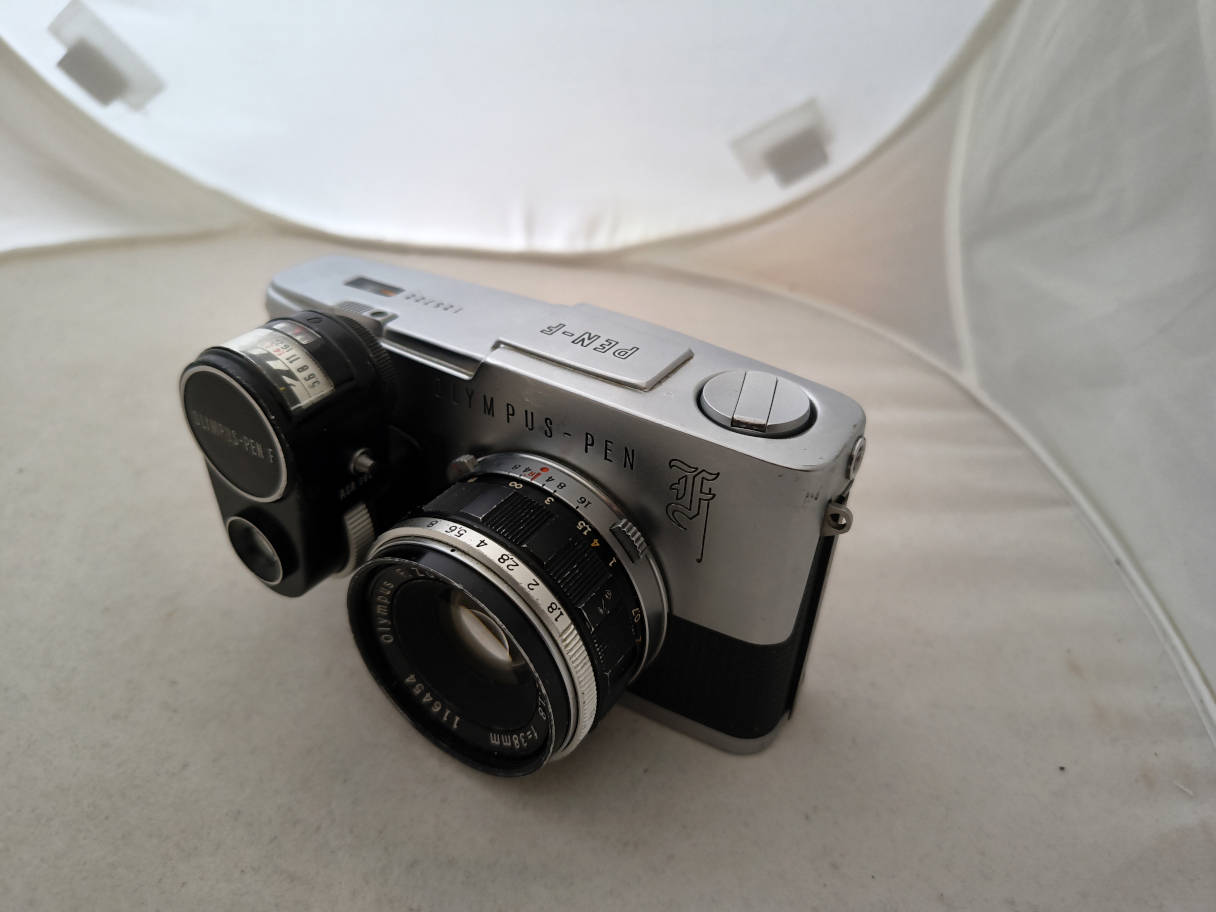
Camera with meter attached.
Camera
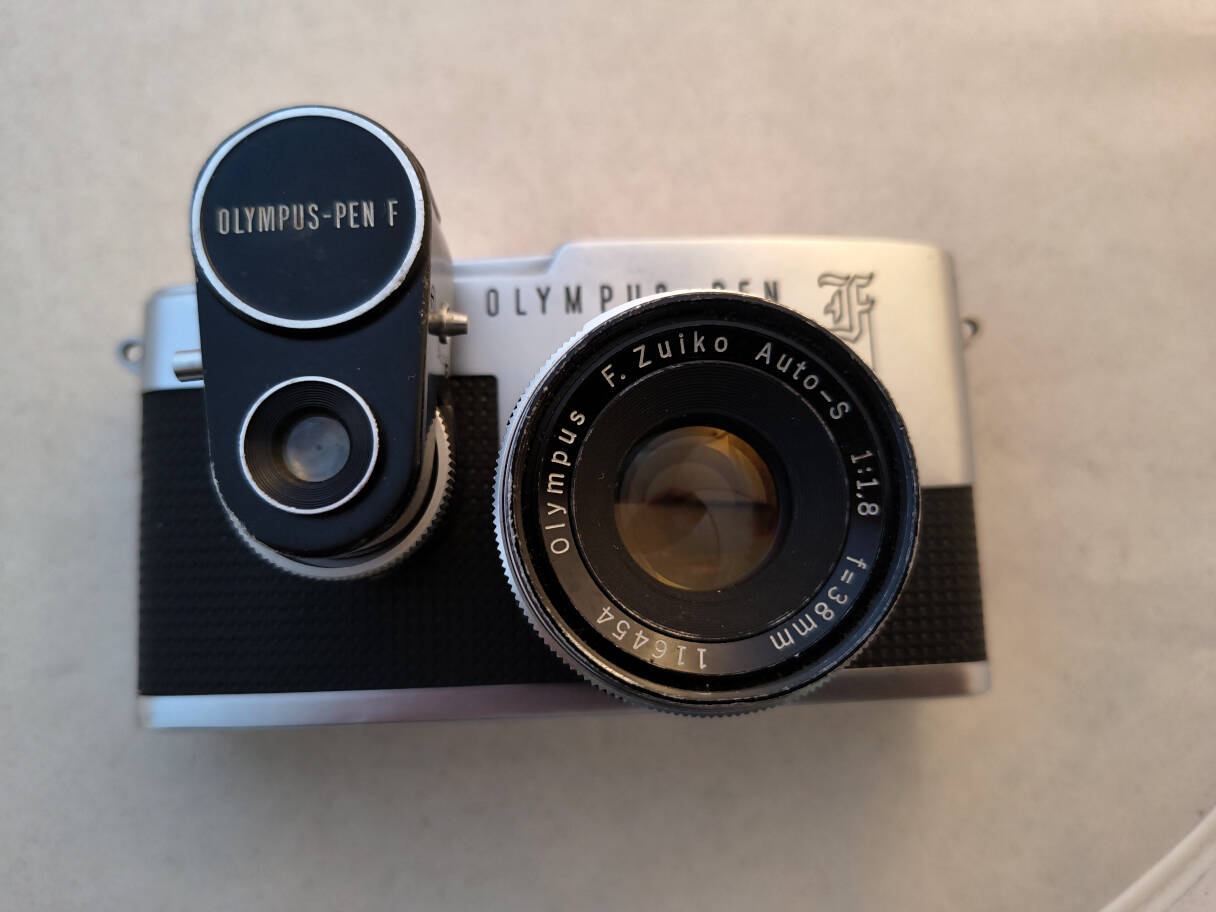
front. A F1.8 38mm lens, a good choice which gives a 55mm equivalent. Top right: the iconic gothic letter F. To the left: accessory meter, quite big.
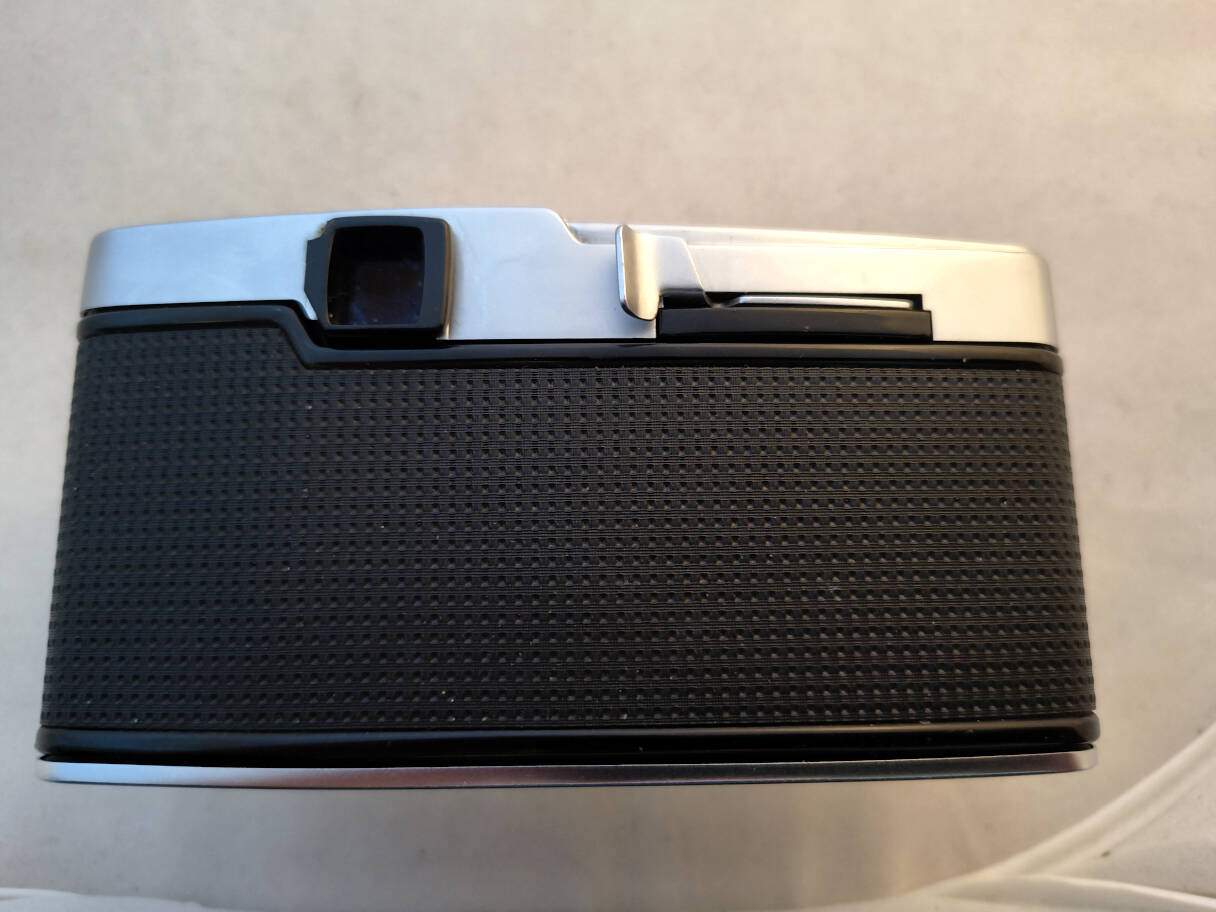
Camera
back. Viewer and advance lever. The camera has no accessory shoe. There
was an etxra shoe to be sqeezed tightly onto the plastic viewer frame which
often damaged it.
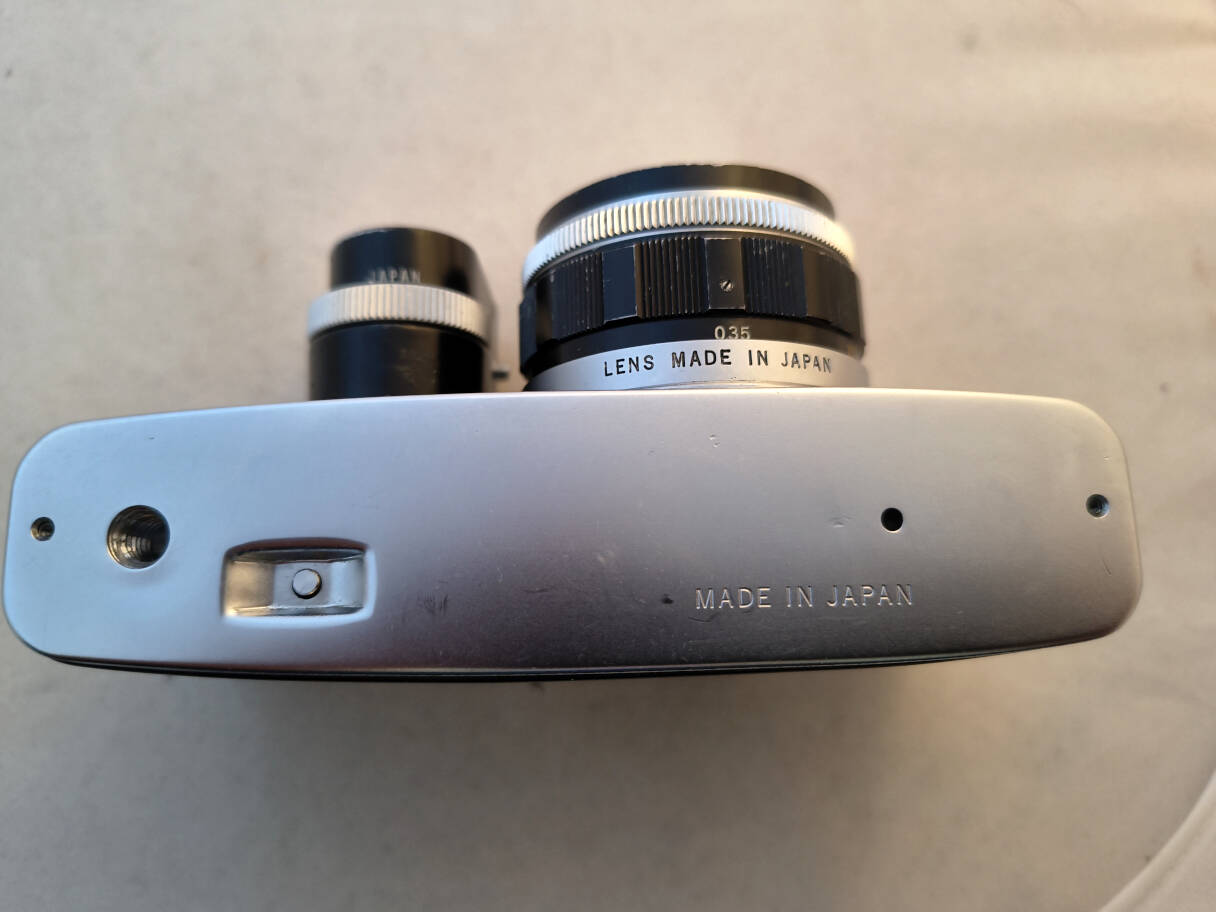
Camera
bottom. Rewind release, Tripod socket.
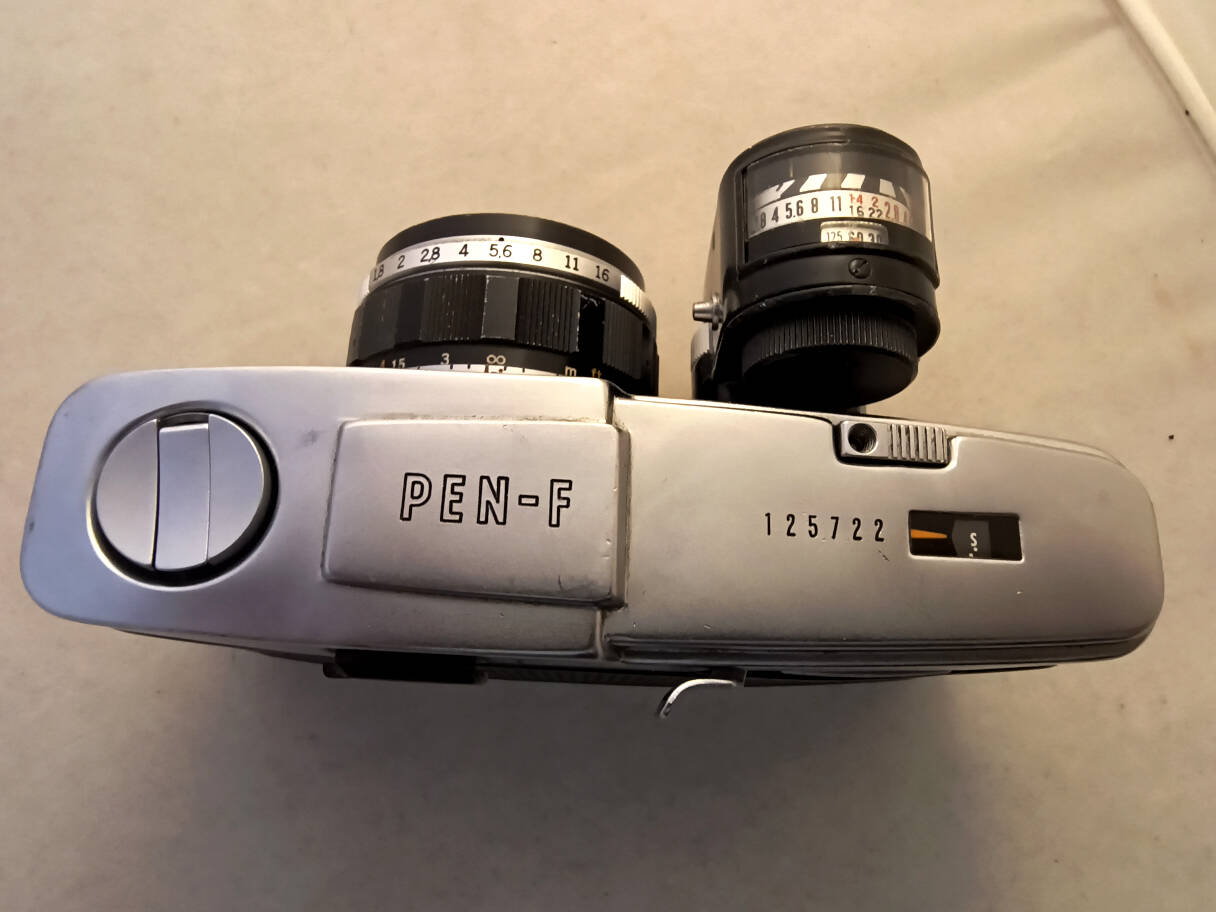
Seen
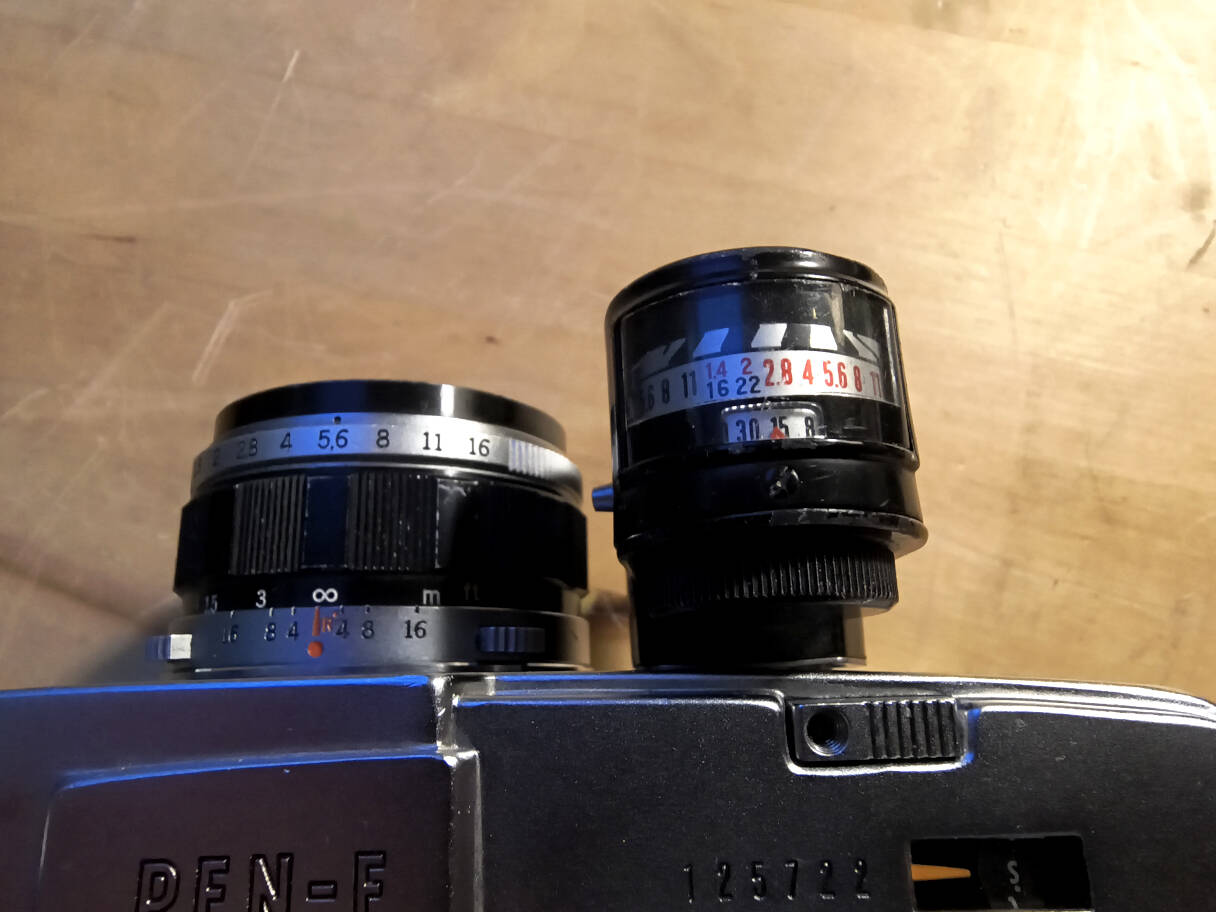
from above. Rewind, shutter release and film counter and meter window.
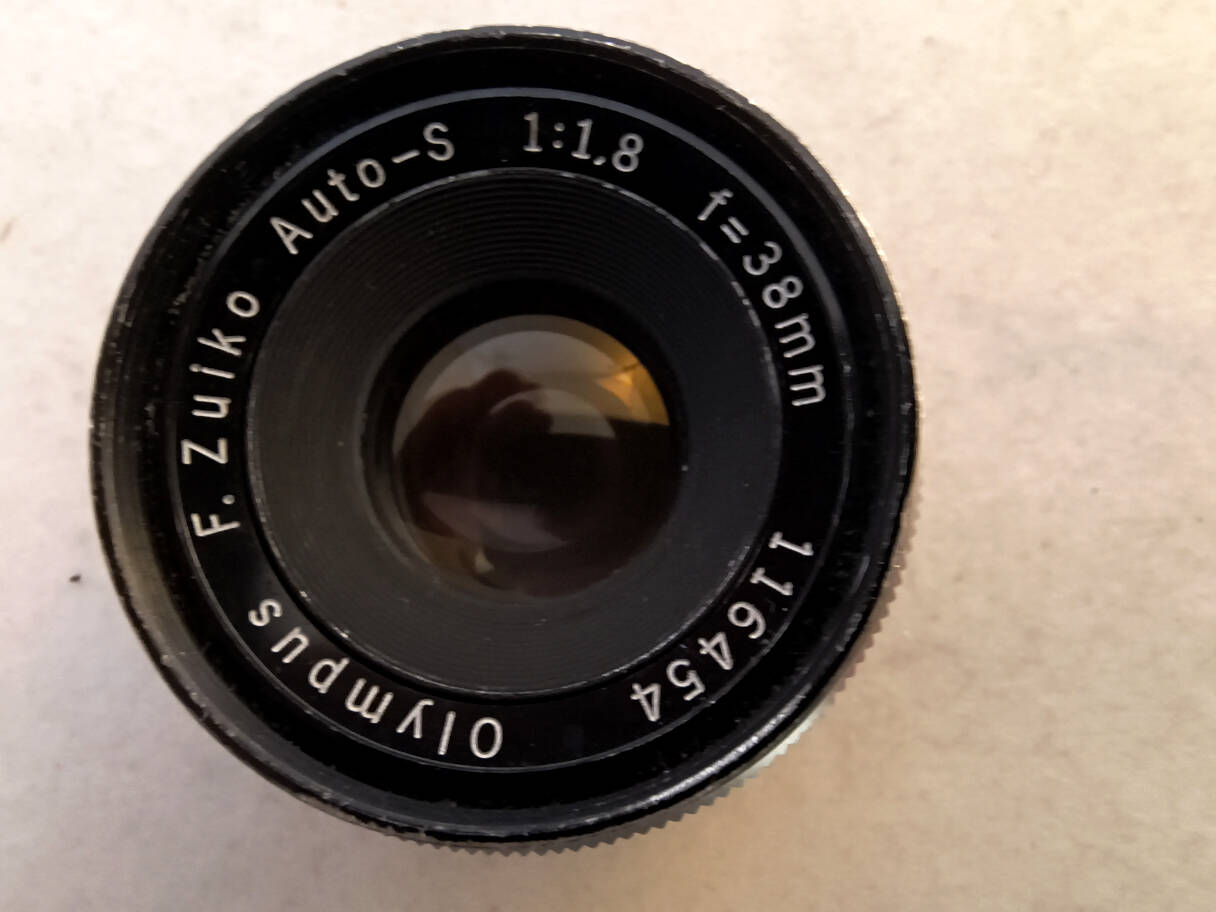
Lens front.
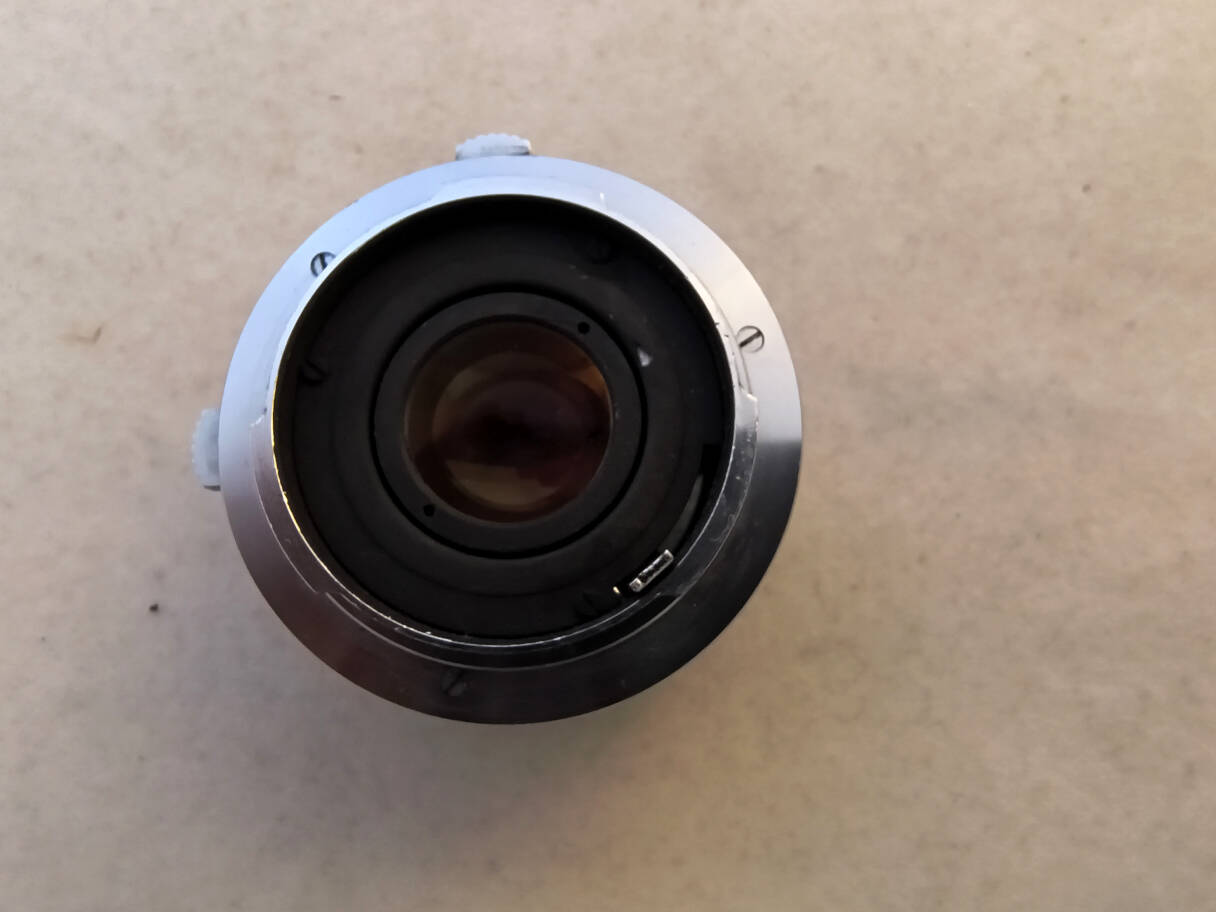
Lens mount.
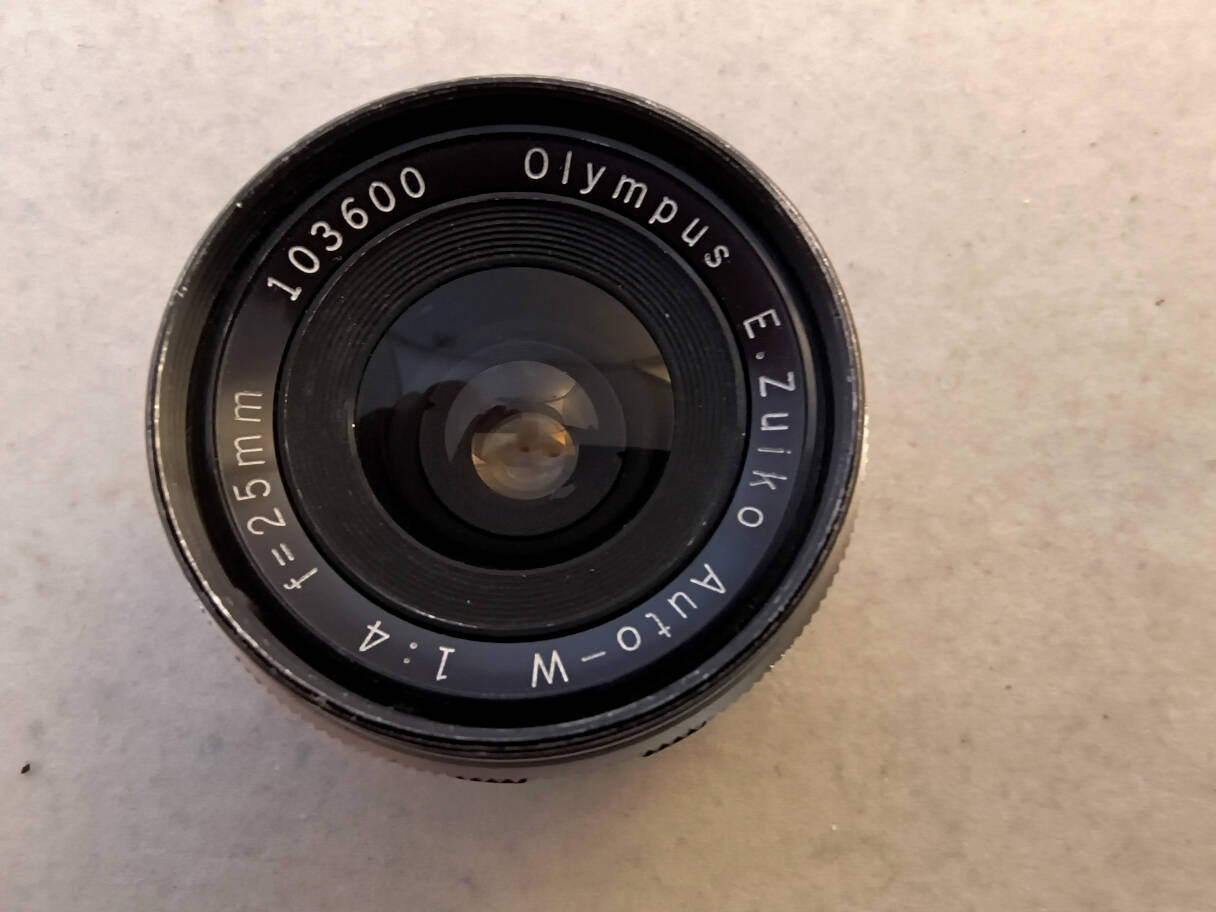
Another, quite early 25mm lens, front..
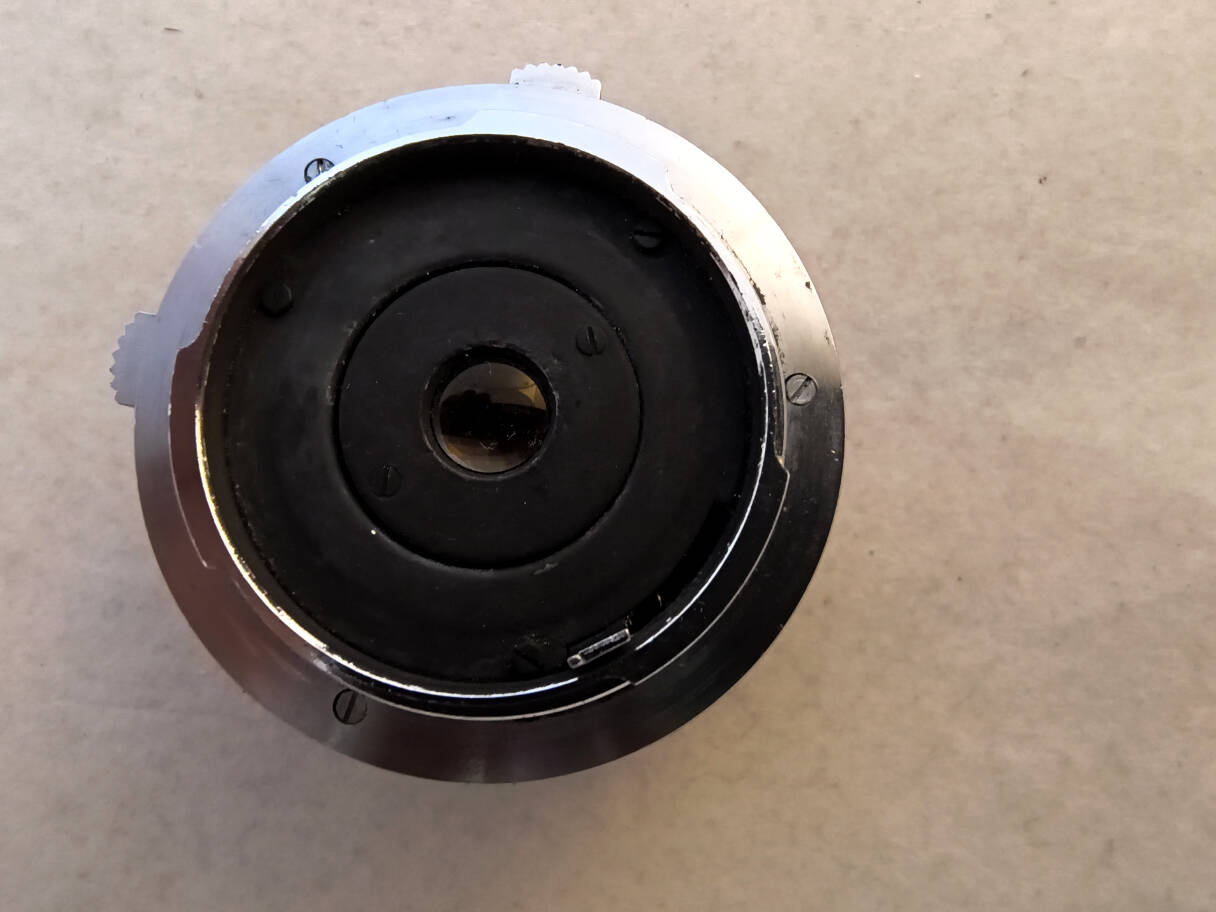
Lens mount..
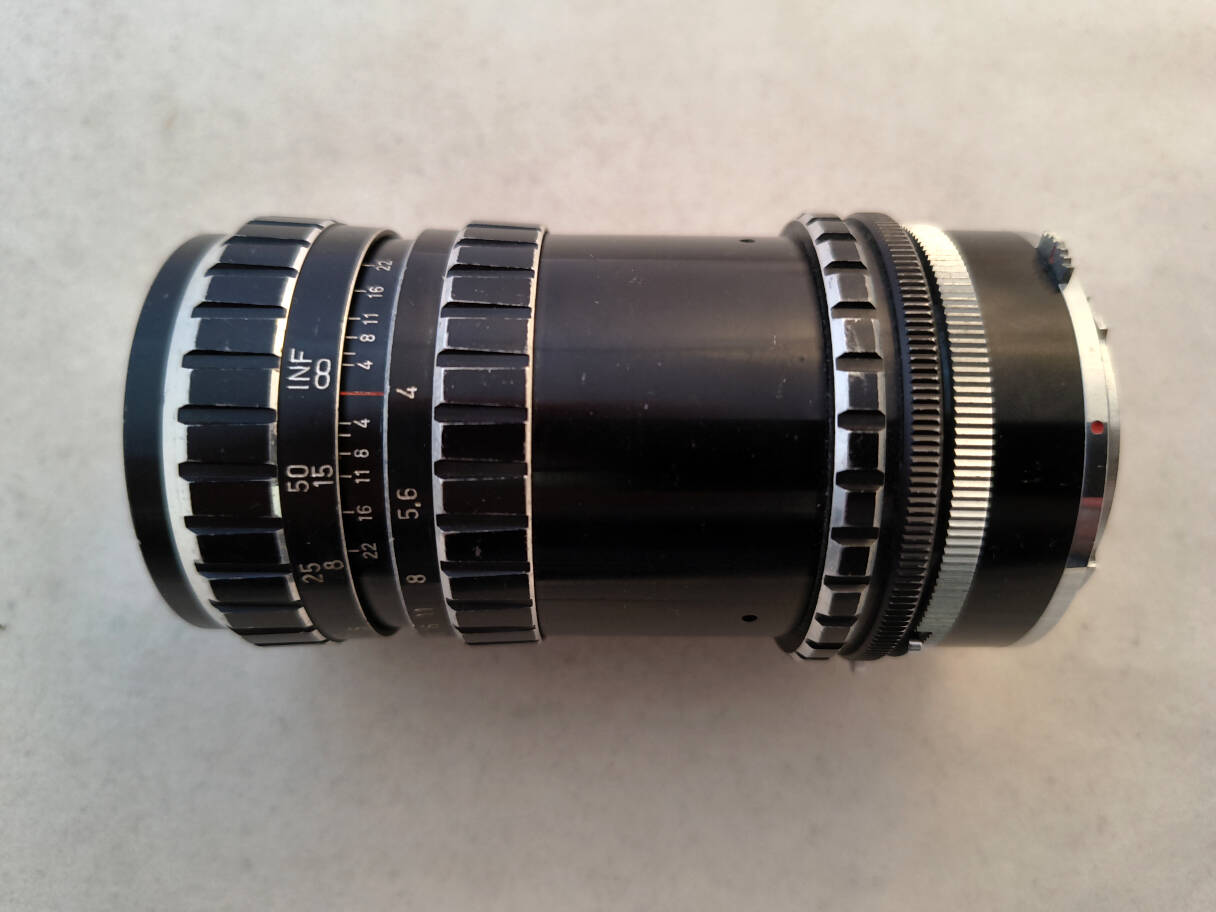
A
custom 100mm tele lens. The equivalent in full format is 143mm. The
lens has an Exakta mount and comes with the rare "E" adapter.
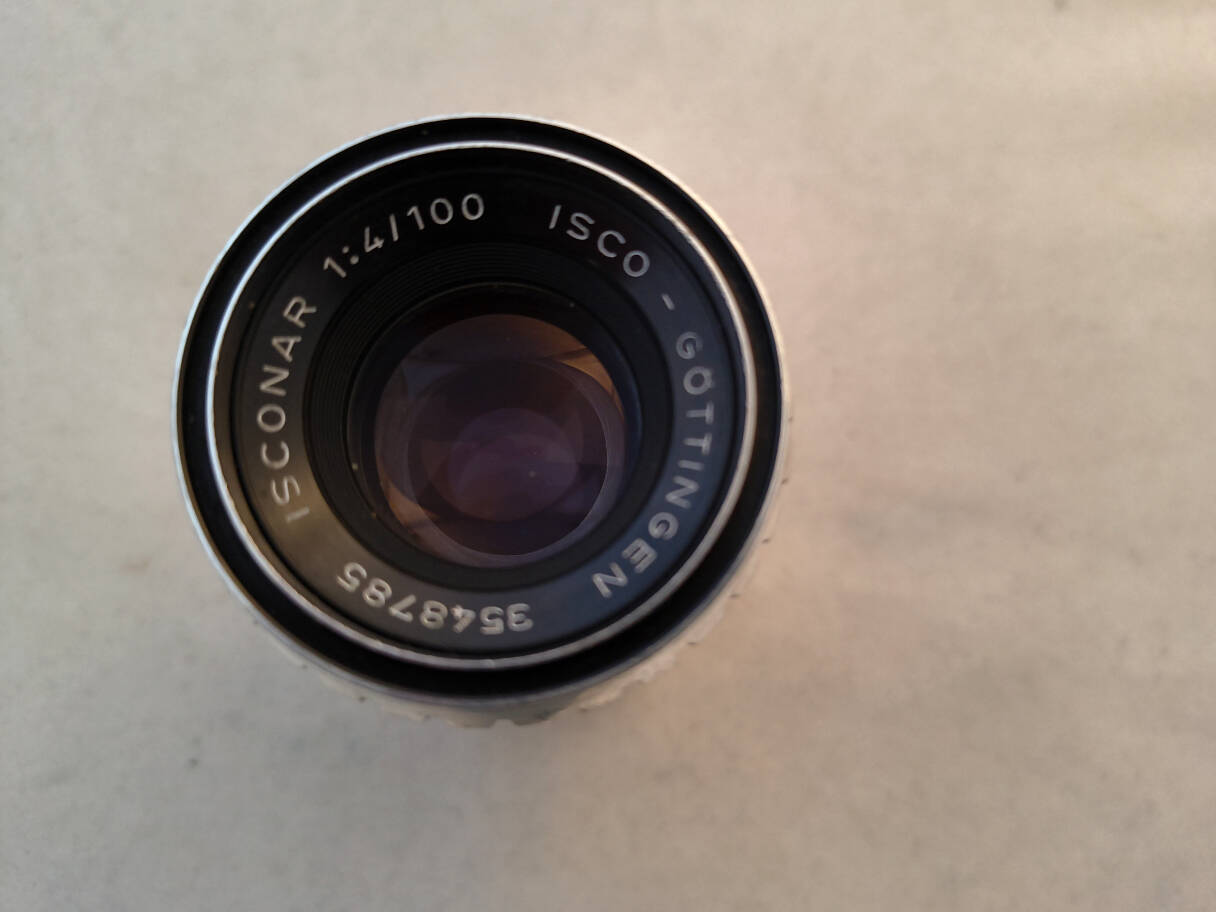
Lens front.
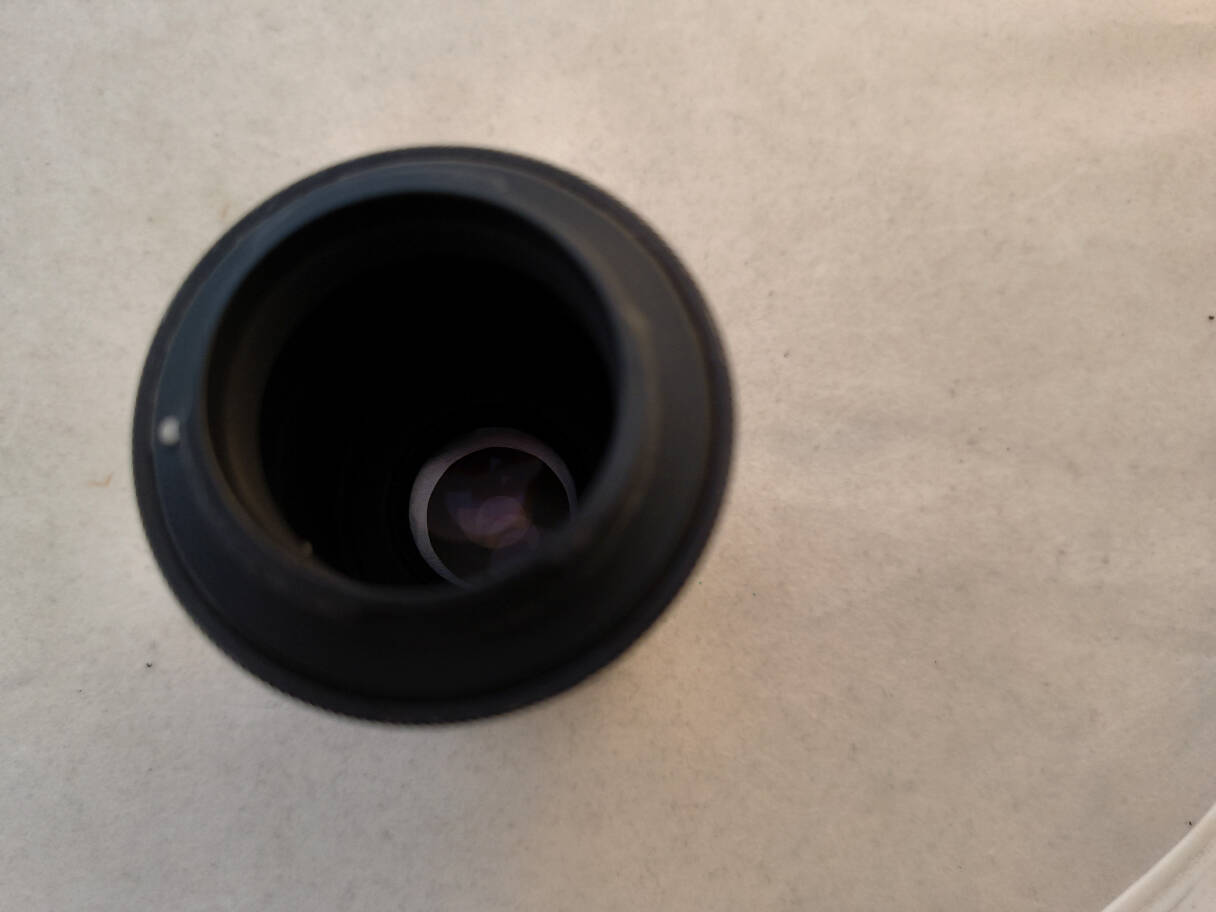
The Exakta mount side.
Let us now look at the accessory meter. It attaches to a bayonet mount
around the speed setting dial. It's semi-coupled and can be used either
in aperture priority mode oder speed priority mode. It has an extemely
wide ASA (ISO) setting, from 6 to 800 and there is a low light mode.
To attach the meter, hold it horizontally, put it over the bayonet
mount and make a clockwise 90° turn to lift it towards the top. The
speed setting has to be on any speed except "B" and no intermediate
setting. Then turn the dial in either direction until you hear a click
that indicates correct coupling.
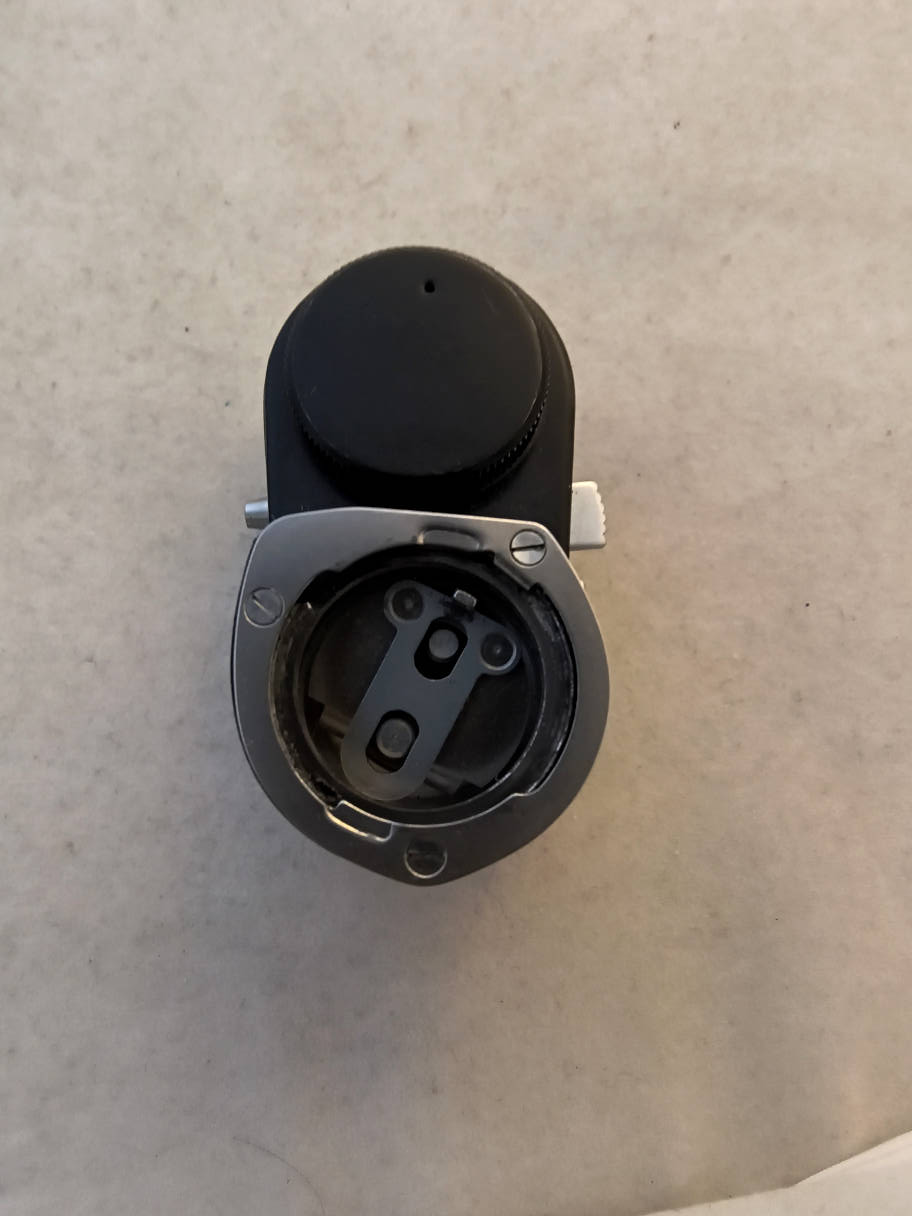
Meter detached, back side. The top is the battery compartment. Under the lid it contained a PX-13 1.3
V mercury
battery that is no longer available. The modern 625 1.55 V battery is
not compatible, it gives wrong results. Please refer to the bottom of the Pen FT page for advice and help.
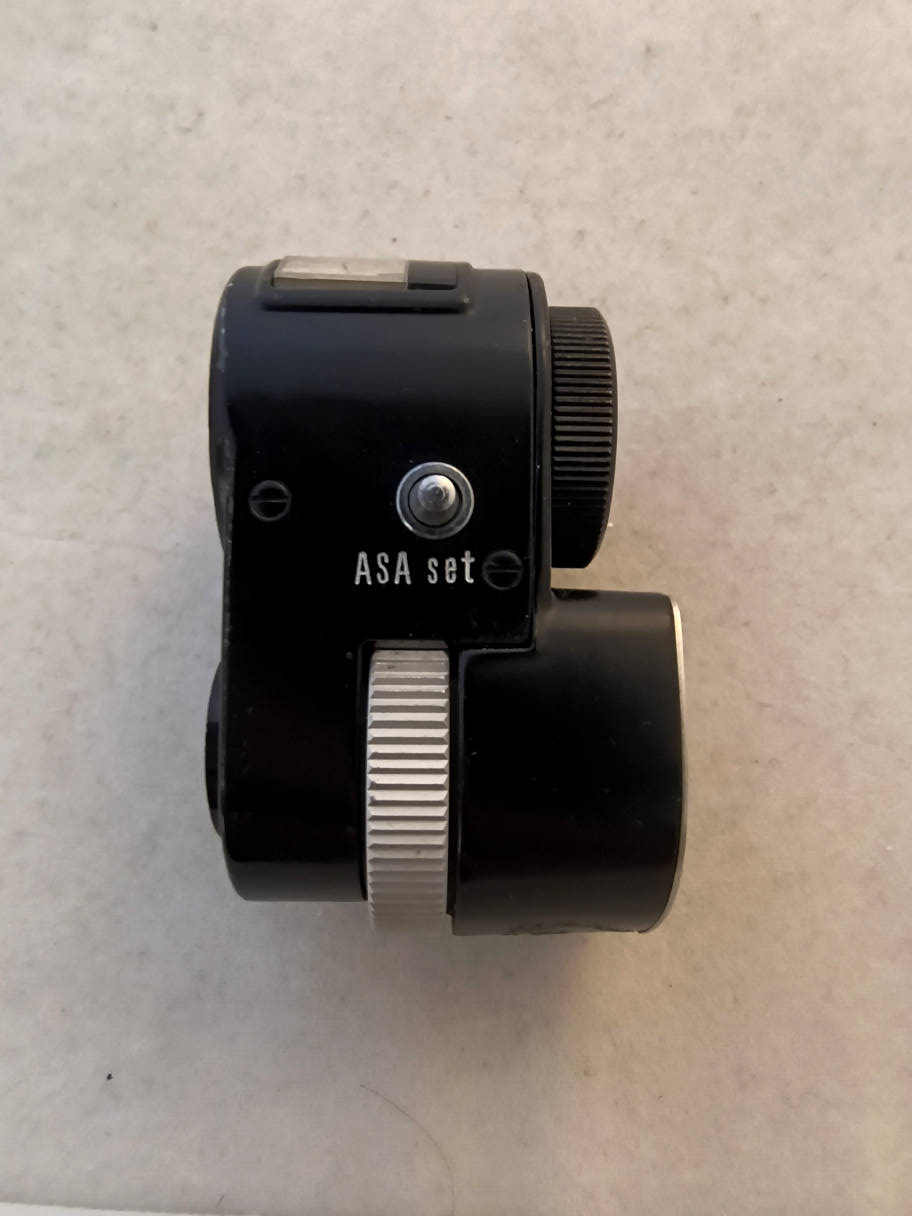
Meter, right side. ASA/ISO setting knob. Bottom: dial wheel.
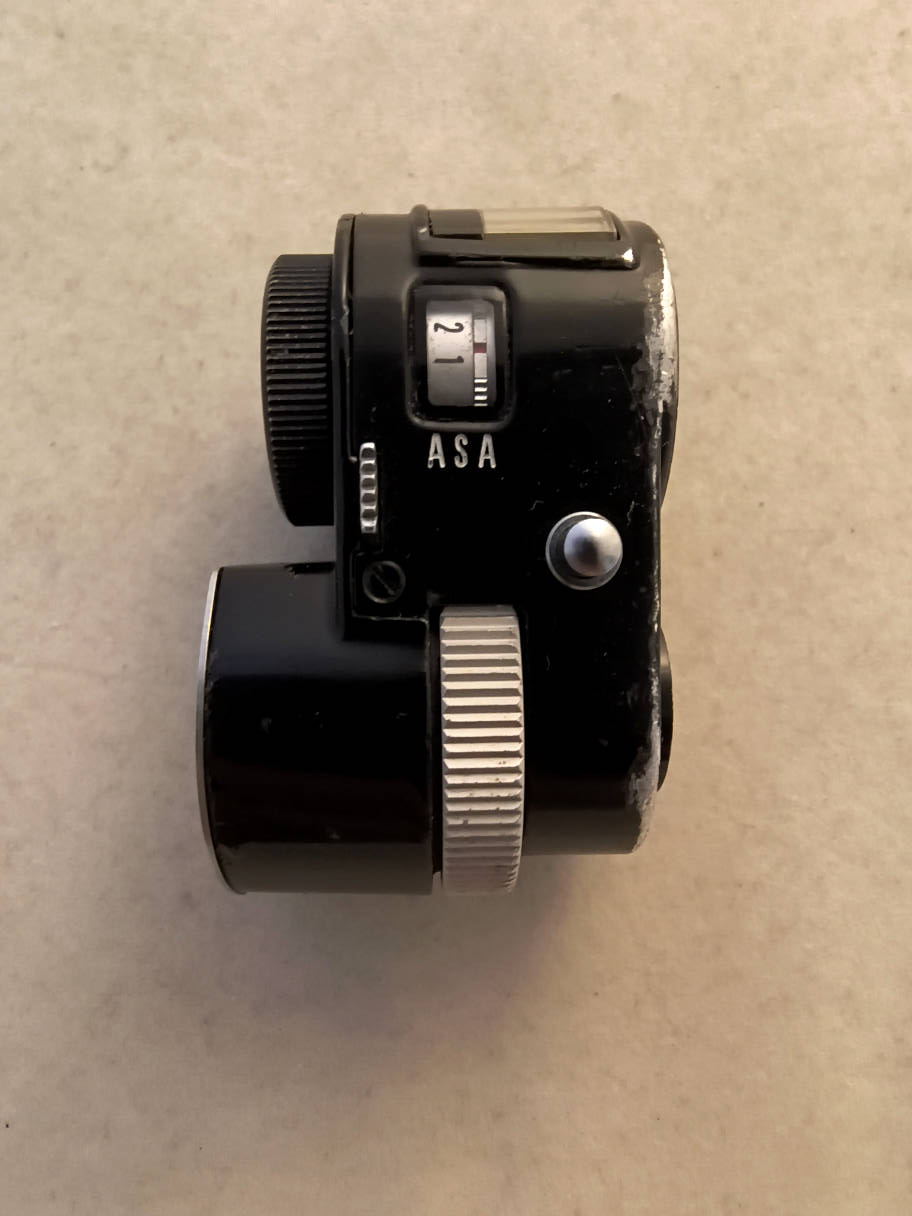
Meter left side. Setting window. Towards the left: lever to detach the meter. Towards the right: low light button. Bottom: dial wheel.
Before inserting the meter, you have to set the ASA/ISO of your film.
It sounds a bit complicated, but isn't. First turn the dial until the
red mark appears in the window as in the picture above.
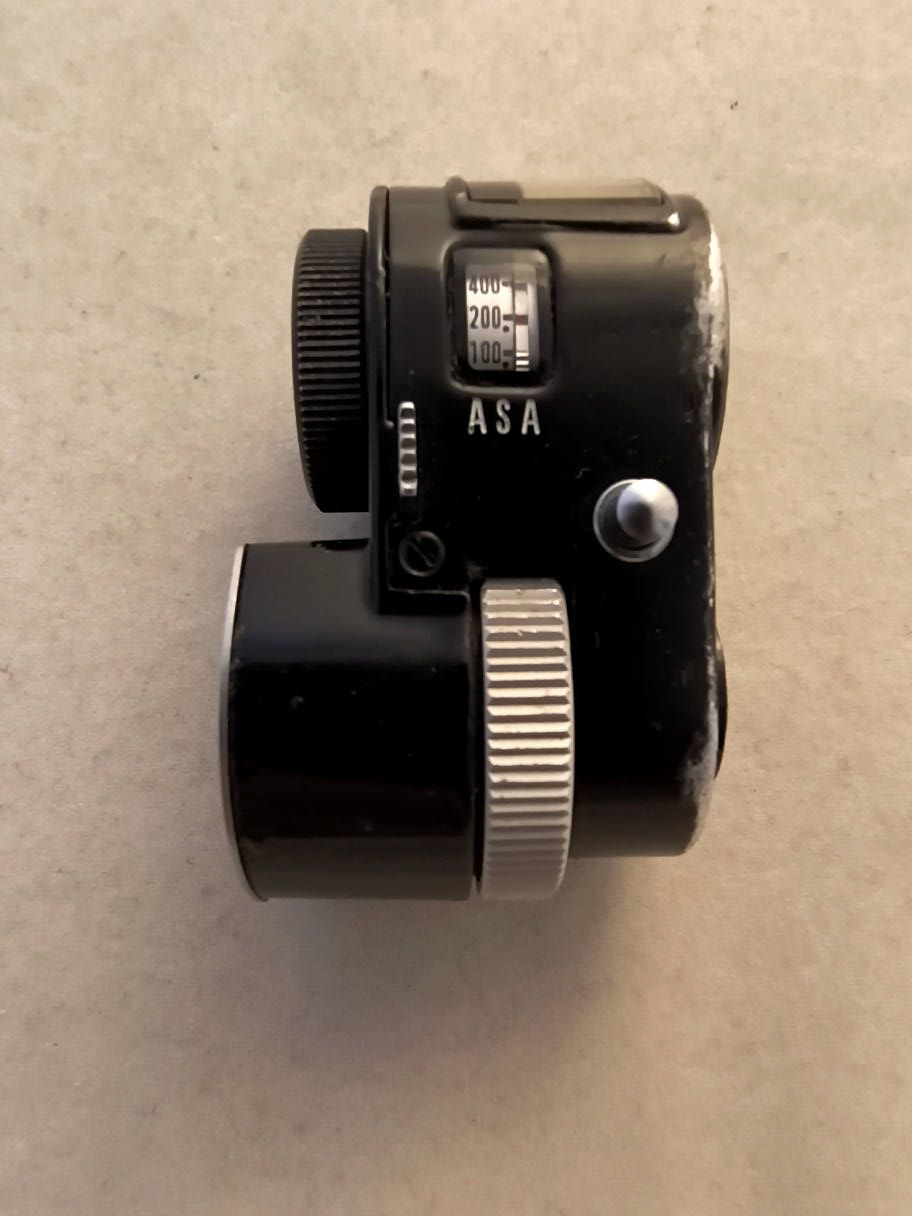
Then press the ASA button on the opposite side, hold and turn the dial
until the number meets your film speed, 200 in the picture above. Now
you are set to attach the meter.
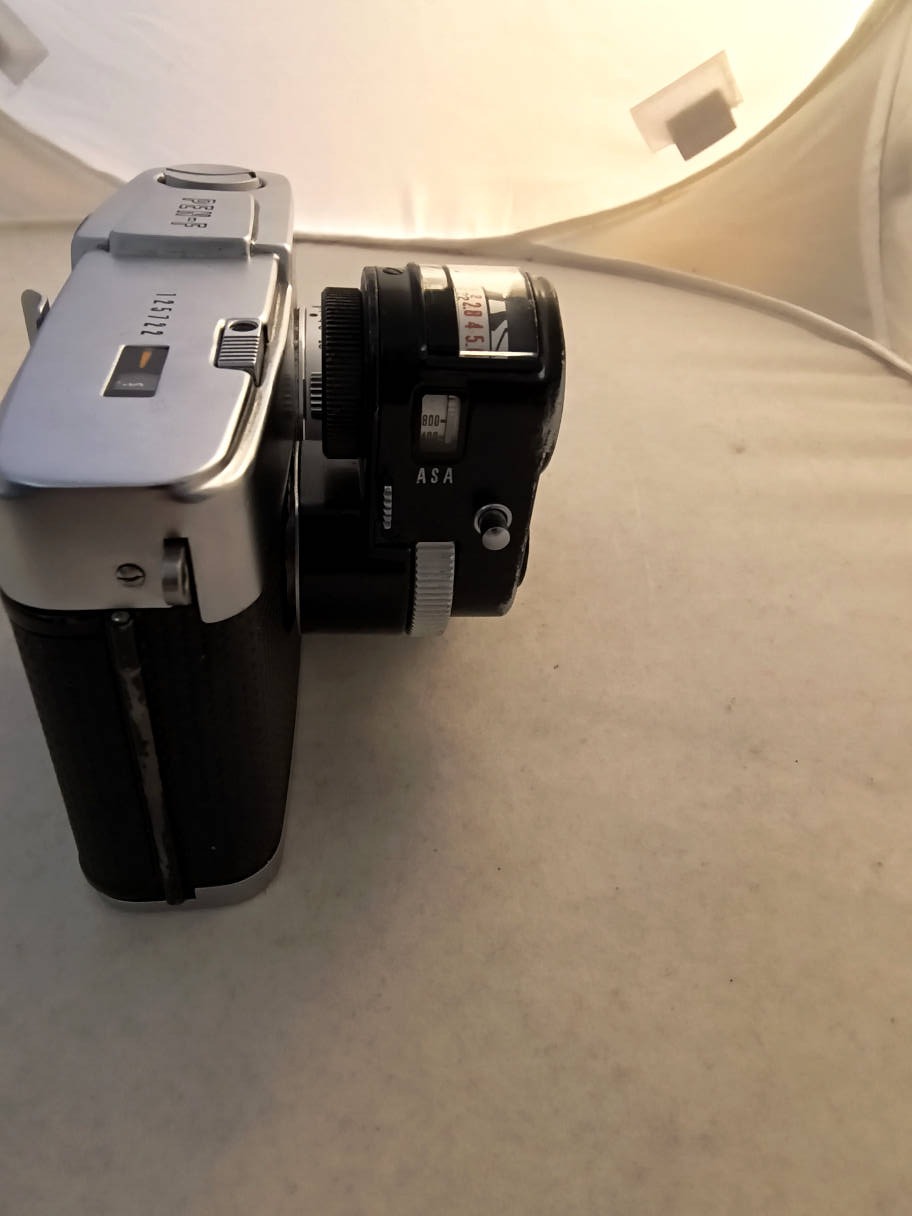
Meter attached and coupled. The ASA window isn't showing any reliable value any more.
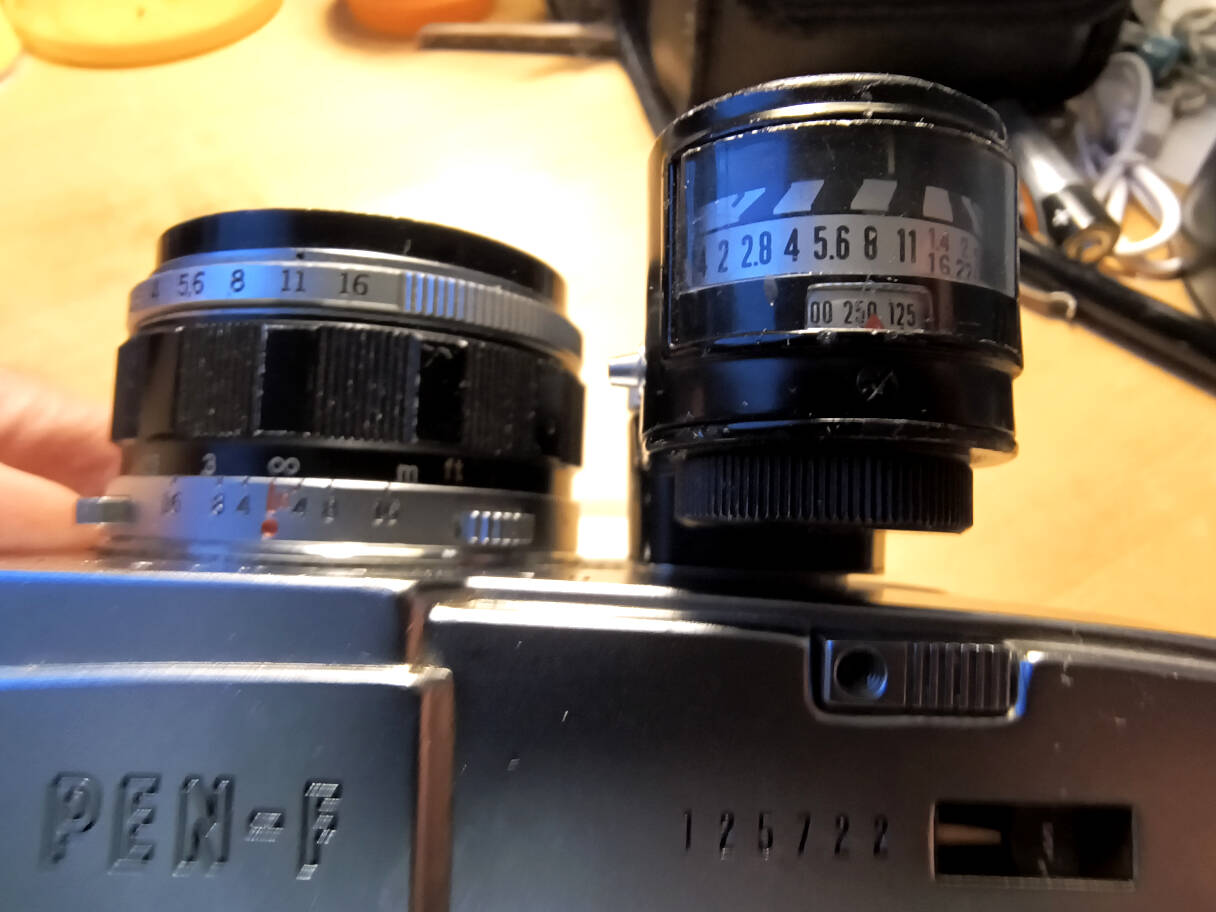
Meter in a mode with sufficient light, nearly F11 at 1/250s.
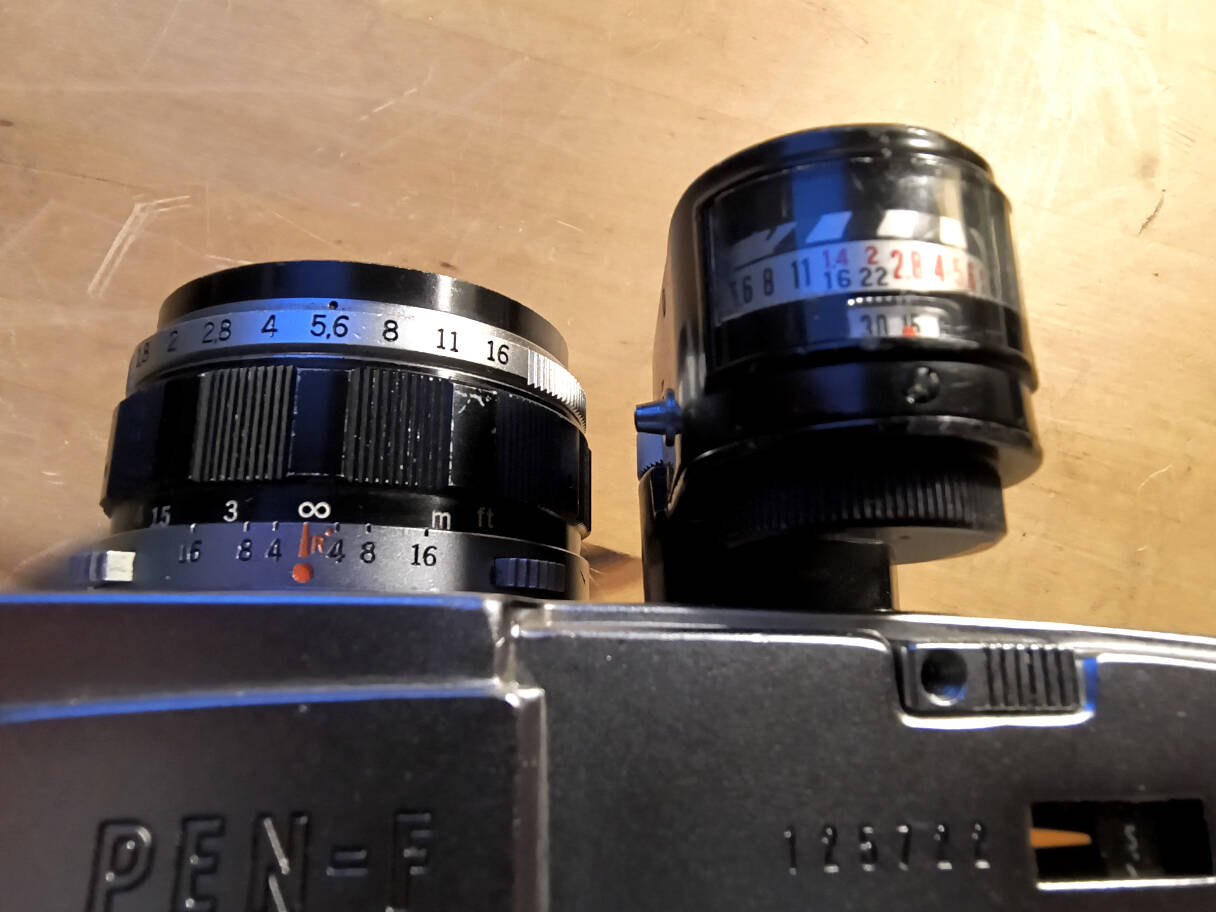
Meter in low light. At 1/15 s you can't read the aperture.
If you press the low light button, the scale changes and shows a low
light reading, F 5.6 in the picture. The mode only shows for abour 2s
and then returns to normal reading automatically.
The meter can't be switched off. It originally came with a little
cap for the cell which usually got lost, as with mine. With a cap or in
the dark, like within a closed case, the battery isn't drained much.
But if you don't use the camra for a while, take the battery out.
This camera is regarded as the summum of the half frame cameras although
launched more than 60 years ago. It is a very nice and very small SLR
camera with very good lenses and it
still works nicely after so many years. Seen today's film prices, half
frames are sought after. This led to high prices for these specific
models.
Handling is easy and logic. Once you get used to the accessory meter system, it's
a good feature in my opinion.
With non-Olympus lenses focus at aperture full open, then close the
aperture to the meter values..
You can find an accessory page here.
In any case: it's a cute little wonder. I'm very fond of it.